

The most awaited months of the year are almost upon us. Sellers are preparing for higher sales, and channels are upgrading their systems for more traffic and an increase in workload. Given that, Amazon made an announcement mentioning an increase in Fulfillment by Amazon (FBA) charges. The message to sellers said, “Similar to major carriers, we’ll introduce a holiday peak fulfillment fee to cover increased seasonal costs.” The surcharge will be applied to some selected FBA orders, for which the delivery is destined for the United Kingdom and Germany. This has a major impact on the sellers across the UK and EU, hence the blog will discuss the same along with damage control methods.
Details into the Holiday Peak Fulfillment Fee
To know what to do ahead, firstly, you need to have complete information on the update, and here are the pointers explaining the same:
- Amazon is preparing itself for the coming busy festival season, and to keep up with the service quality, the cost of fulfillment is being increased.
- The surcharge will not be applied to every order; the oversized items and low-priced FBA goods will stay unaffected. The reason for the same being the protection of sellers selling bulky goods, since their charges are already pretty high, and those in Amazon’s budget program.
- The hike in fee will be effective from October 15th, 2025 to January 14, 2026. The average fulfillment fee to be applied per parcel item will be £0.10 and £0.05 per large or extra-large envelope item.
Amazon Holiday Peak Fulfillment Fees Structure
The fee structure for the revised charges can be found on the official website of Amazon, but here’s a little glimpse of the same:
How to reduce the impact of Amazon Holiday Peak Fulfillment Fees?
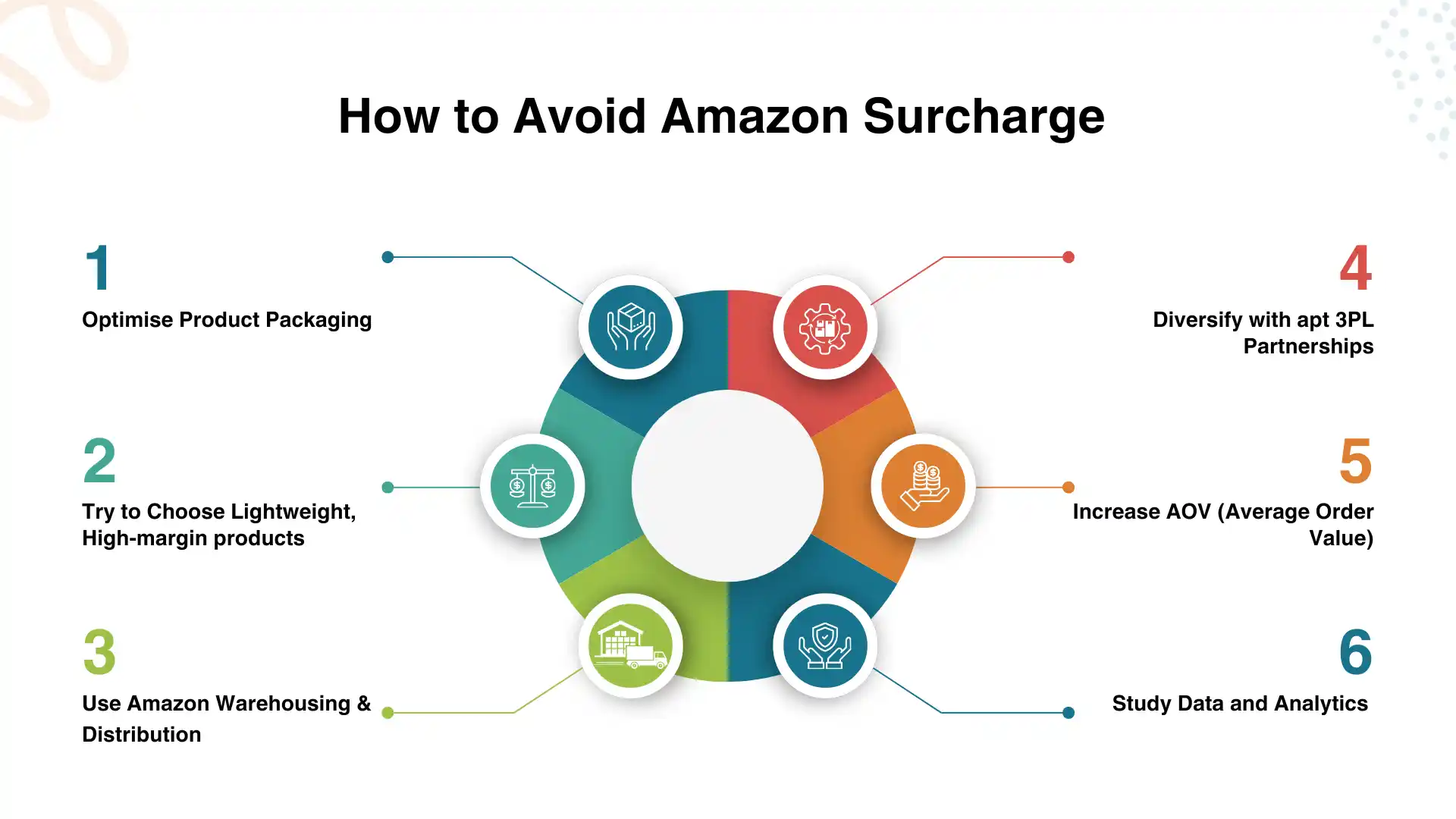
The charges to be paid on fulfillment are inevitable, so is selling on Amazon. For most of the sellers, the e-commerce giant brings the maximum sales, especially during festive seasons. But the right strategy can help you optimize your selling, and profits. Here’s what you need to do:
1. Optimize Product Packaging
Sellers need to find spaces between the brackets. The charges are to be applied in different tiers; sellers can modify the product packaging such that it fits into a cheaper product bracket, and the charges applied are the least possible. Sellers can choose for vacuum sealing, box resizing, or the utilization of polybags rather than cartons.
2. Try to Choose Lightweight, High-margin products
Sellers need to go through their inventory and see what costs them the least on FBA while saving a considerable sum as profit. They are bound to bring quality business rather than quantity, which does not earn them much profit. Also, make sure while applying this, the business does not miss out on its best sellers.
3. Use Amazon Warehousing & Distribution
Sellers using this facility of Amazon get to store their products in the warehouses located nearest to consumers. This will save the seller the cost of transportation and also give them the flexibility to restock. Also, the chances of stockout and dead inventory reduce due to real-time updates and end-to-end implementation.
4. Diversify with apt 3PL Partnerships
Sellers need to look for alternative options through which they can fulfill their orders. The products not facing a surge in the peak season can be fulfilled via Amazon, but the rest can be shipped through different 3PL service providers to save on costs. Also, FBM is a great option for local fulfillment, providing the best possible service to the customers.
5. Increase AOV (Average Order Value)
In order to increase the AOV, sellers can go for the bundling of products. As consumers place orders for bundles, the order value increases; also, the fulfillment of all those orders has to be paid for only once, eliminating the cost of repeated deliveries. Bundles are more appealing to consumers as well, due to the price and ease that they offer.
6. Study Data and Analytics
Sellers need to analyze and forecast the demand even before it drops. It can only be done if the right data analysis is done using the right tools or multichannel order management software. It will allow the seller to have a view of the storage space required. The optimal number of products will be stored for well-planned selling, and the result will be higher profit margins.
Happy Selling
Most of the sellers did not like this decision made by the e-commerce giant, but Amazon quoted, “We’re preparing for greater utilization of our Fulfilment by Amazon (FBA) network, and increased fulfilment and transportation operating costs across the supply chain.” So, sellers have no option but to adhere to the changes. But with the implementation of the above-mentioned strategy and counterplan, sellers will not just save on money but also be able to increase profits. Relying on 3PL is always a great option when such situations occur, as it will allow the sellers to benefit from the wide consumer base established by Amazon and fulfill the order at a much lower price with a compatible 3PL integration.
Get in Touch

.webp)

.webp)


