
Call it inventory, stock, merchandise, goods, wares, commodities, or product range - it all means the same thing. Stock is undoubtedly the most important asset for a business dealing in products. What happens when it is left unsold due to some forecasting errors or mismanagement? Capital is going to waste, warehouse space is occupied for nothing, and business is facing a loss. If you think this is a unique situation for your business, then understand that it is not, and this blog is exactly what you need to solve the issue of dead stock. So, calm down, read the blog, and implement what it says.
What Is Deadstock in Logistics?
As mentioned above, when the inventory remains unsold for an extended period of time, such that it might not sell at all, it is referred to as dead stock in logistics. The reason for the stock being unsold can be any of the following:
- Obsolete inventory
- Slow-moving products
- Change of market trends
- or Seasonal Changes
Whatever the reason, dead stock in logistics has a direct effect on the profitability of the business and cash flow. Also, sellers face issues with warehousing, supply chain management, and demand forecasting.
What Causes Deadstock in Logistics Operations?
For every problem, there is a root cause that gives rise to it. Now, solving the problem should not be a surface-level job. It should be dug right into the roots to pull it out. Here are the causes that give way to dead stock in logistics operations:
1. Over Ordering
Demand forecasting is yet another skill that allows the sellers to avoid over-ordering. Due to over-ordering, the supply tends to surpass the demand, leading to stock lying unsold. While it is necessary for a seller to have a buffer, they need to understand that the same should be such that it bridges the gap when the supplier is taking time to deliver the goods.
2. Poor Sales and Marketing Efforts
While selling online, sellers need to keep in mind that they have competition all around them. They have to create sales with marketing, advertising, and content creation. Without the same, it would not be possible to make use of the inventory. Raising awareness of the product among the target audience should be on top of the priority list for the sellers to avoid dead stock.
3. Lack of Quality Control
Maintaining consistency with the quality of products is like a skill for sellers making sales online. When sellers lack the same, consumers often return the products that do not match the standards. Even when the same piece of inventory reaches some other consumer, they would most likely return it, hence the same would end up in dead inventory.
4. Long Lead Times
It might be challenging to make sure to have what people want, when they want it, because trends change frequently. If lead times are lengthy, the demand for the supplier's product may have already decreased by the time it takes for it to reach your warehouse. Long transit periods can also easily leave the seller with inventory levels that no one is interested in buying.
The Impact of Deadstock on Logistics Operational
Seller's ignorance of inventory levels has definite effects on the business. The following is the list of the same:
1. Tied-Up Capital
Capital that may be utilized to buy well-liked products, invest in new sales channels, or enhance operations is tied up by dead stock. This opportunity cost limits the ability to adapt to shifting client demand and has a direct influence on cash flow.
2. Higher Warehousing Cost
Each dead stock consumes valuable warehouse space, increasing storage expenses. It also decreases the amount of space available for products that move quickly. Profit margins are rapidly tightened by this.
3. Low Profitability
Revenue is lost due to unsold inventory. Dead stock is more likely to be written off in accounts or sold at a loss the longer it is kept in storage. This lowers overall profitability and may even cause harm to the company's financial stability in the long run.
4. Inefficient Supply Chain
Dead stock makes it more challenging to optimize stock levels, slows down inventory turnover, and complicates inventory control. If warehouse space is overflowing with unsold goods, it may also result in stockouts of popular products.
5. Dissatisfied Customers
Customers might not be able to avail their preferred products from the store, since the warehouse is full of dead stock. They will be dissatisfied and hence turn to a competitor for the same product. In such a case, the seller is losing consumers and sales at the same time.
Effective Strategies to Reduce Deadstock in Logistics
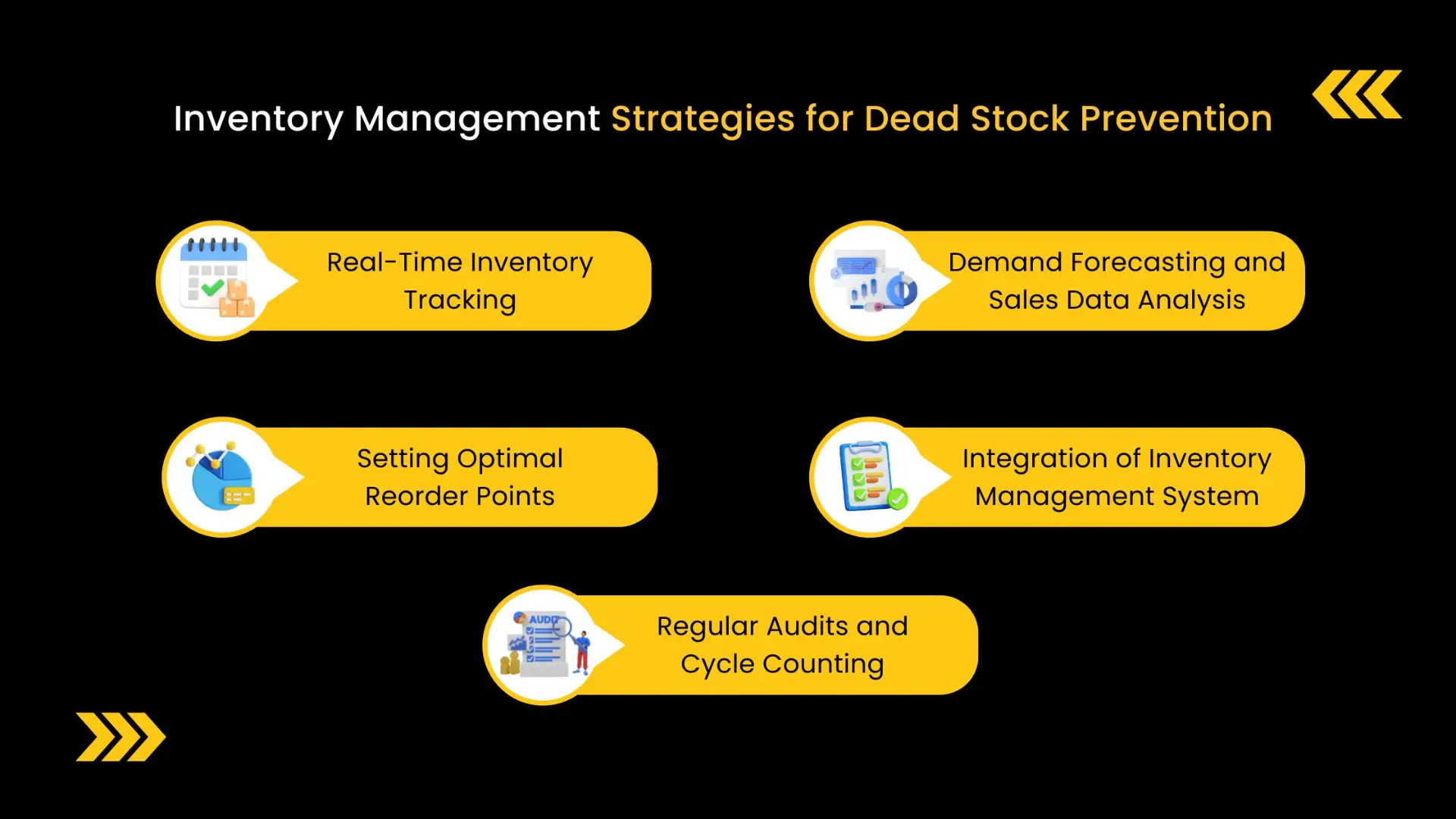
Dead stock prevention is the first thing that sellers need to work on, but this is in reference to the future. For now, here are some tips that can help you get rid of or prevent dead stock:
1. A Free Gift with Purchase
This will work best with the products that just went dead due to a change in trends. The products will be excellent, so sellers can ask their consumers to add a certain minimum amount of products to their cart and get a free gift on the purchase.
2. Bundling
The ultimate hack for getting rid of dead inventory is to pair it with some high-selling or trendy products. This way, buyers feel that they are getting more for less money while the seller is still able to cover the cost of the stock, even though a profit is not made from dead stock.
3. Partnership with Other Brands
Sellers are seldom friends with other sellers. So, they can even sell their dead inventory to some other related business at a minimal price and ask them to add the same to their store as a free gift or co-branded product bundle.
4. Return Bad Quality Products
Not every time is it the seller's fault that the inventory levels are not optimal. In some cases, the supplier might not have sent products up to the mark. In this case, sellers need to make sure that they send the bad quality products back.
5. Announce Clearance Sale
Discounts at a clearance sale attract a lot of new and old customers. So, this is a great chance to expose your brand to a broader audience and earn new customers while clearing the stock that is in the warehouse, eating up space.
6. Try Multi-Channel Selling
There is a possibility that the customers on your current sales channel have different tastes and price interests. In this case, sellers can adopt a multichannel selling strategy by shifting their listing to a different sales channel and get sales. Also, you will be able to know your right audience and platform for sales.
Key Takeaways
Now, you know how to get rid of dead stock, but what can you do so this situation does not arise in the first place? Well, the simplest solution will be an inventory management software that allows you to integrate different sales channels on a centralized dashboard to track the stock located in different locations. Let’s be real, manual work brings in a lot of errors, and an automated system is the only way to ensure error-free data output. MapMyChannel integration application allows you to integrate different sales channels and manage their respective inventory efficiently. Maintaining an optimal buffer stock and managing stock in different geo-locations is not even a subject of concern as the seller integrates their online business with the MapMyChannel ecommerce application. Now, go ahead and integrate to have a tension-free selling experience.
Stop letting deadstock slow your business down.
Use MapMyChannel to manage multi channel selling effortlessly, sync your inventory in real time, and reduce obsolete stock with ease.
Get in Touch

.webp)

.webp)


