
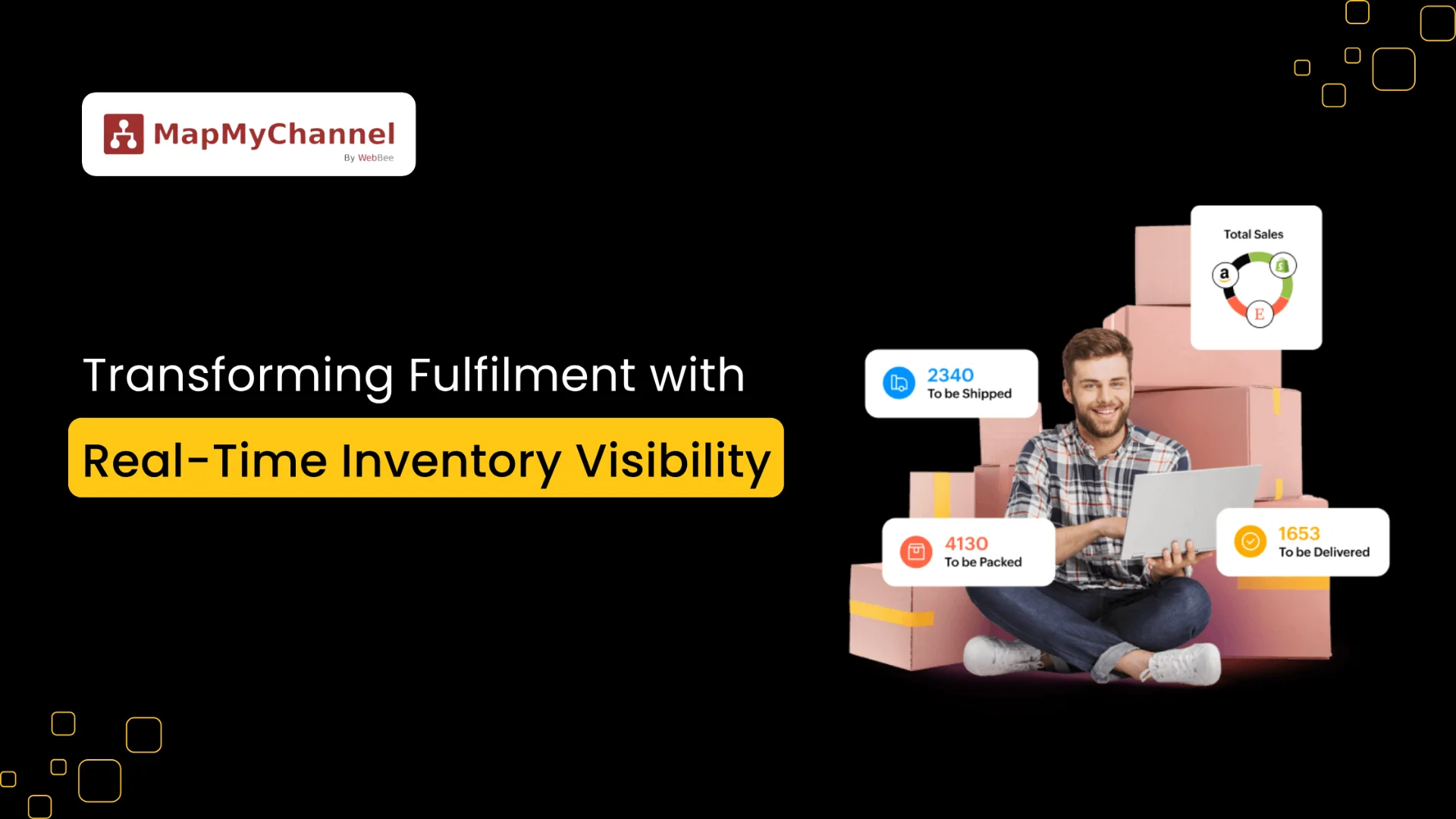
Inventory this! Inventory that! Inventory here! Inventory there!
This ultimate chaos of stock mismanagement is like a standard problem that comes as a package deal for sellers online. This leads to delayed eCommerce fulfillment, dead stock, unknown stockouts and all the mess possible around inventory. This blog will surely discuss the challenges but let’s jump into the solution that is real-time inventory visibility. Different sections of this blog will discuss different aspects of this term and how an ecommerce business functions with and without this.
What is Real-Time Inventory Visibility?
When sellers are able to track the stock availability in real time through inventory visibility software, they can supply their orders more efficiently to their customers. Real-time inventory visibility allows the sellers to keep a track of stock through sophisticated, well-designed software that knows what’s coming and what’s going out or delivery. Also, a capable one supports sellers with multiple additional features like buffer inventory and multi-location inventory management that prevents stock mishaps like stockout and dead inventory.
The Benefits of Real-Time Inventory Management Unveiled
Inventory tracking in real-time allows the sellers to manage their business and the overall operations much better. Here are the benefits:
1. Eliminate Stockouts and Dead Inventory
This is the primary advantage offered by real-time visibility. As sellers get to have a consistent look into their inventory, they can restock when the products are going to be out soon and strategize well when the stock is going dead. Dead stock can be cleared with discounts, and then the supply can be managed according to need. Hence, the loss of both sales and capital can be prevented.
2. Faster Order Fulfillment
Order fulfillment speed can be optimized with the help of real-time stock updates. The inventory management systems can be integrated with warehouse management software (WMS) or a third-party logistics partner, giving way to faster fulfillment and higher customer satisfaction. The delays will be eliminated, and repeat orders can be fostered.
3. Optimizing Warehouse Operations
Warehouse operations depend on the inventory automation tools. If the same are aligned well with the business, then the warehouse can easily manage the inventory. Also, the picking errors can be reduced while the workflow efficiency will improve. Through an API-Integration application, sellers can know about the movement within the fulfillment centers to make sure that the stock is in place to process the orders in a timely manner.
4. Better Demand Forecasting
Demand forecasting is rocket science if the business is aligned with an e-commerce inventory management solution. The demand for a product can be analyzed from the rate of replenishment, and hence, stocking can be done accordingly.
5. Accuracy in Business Understanding
The best way to understand a business is through the inventory turnover rate. Sellers can understand their best seller, the weak points, and everything else about the business from real-time inventory visibility. Sellers can figure out what type of products are working for them and what is not, so others can be improvised accordingly.
Real-Life Example for Better Understanding
Lenovo
Lenovo, as a multinational company dealing in technological products, used real-time inventory visibility. They wanted to get real-time visibility throughout the international supply chain. The following are the results:
- Lenovo was quick to notice the supply chain interruptions by mixing data from various sources.
- This helped them to maintain a consistent flow of inventory and keep customer orders on track.
- Lenovo decreased the delays in delivery and maintained smooth operations by using analytics and real-time alerts.
- Lenovo could now offer customers accurate delivery information while improving transparency and trust.
- Hence, Lenovo was able to minimize overstock, avoid delays while improving customer satisfaction.

Challenges for Your Business Without Cloud-Based Inventory Visibility
When your business is not updated technologically, there are certain challenges that it has to encounter. Here’s a small list of the repercussions:
1. Beating Around the Bush
When sellers are not able to track their inventory, the business runs in a haphazard manner, as there are no insights into the inventory. There is no track of incoming and outgoing inventory. Which makes inventory management a complete mess
2. Data Discrepancies
Since there is no uniform channel through which the inventory is managed and tracked, there will be data discrepancies, due to which sellers will not be able to get a clear idea of the status of the stock. They will lose the items in transit or even warehouse in this case.
3. Stockout and Dead Inventory
These are the two most common issues that arise due to improper inventory management. When stock is not tracked, a stockout situation leads to loss of sales, and dead inventory decreases the overall profitability of the business.
4. Poor Decision Making
Decisions in a business depend on the data and reports compiled for the business performance. Most of this is dependent on the sales and inventory turnover. Without an apt order management system (OMS) integration, sellers cannot get accurate data, leading to poor decision-making.
The overall operations and fulfillment of the business are also affected by poor inventory management. Hence, ERP integration for eCommerce plays an important role.
Get the Inventory Sorted! ASAP…
Inventory is the center of a business, be it online or offline. When a business begins to manage its stock better, it is destined to grow. Also, with inventory in place, automated fulfilment systems can function well and deliver efficiently. Multi-channel inventory sync further amplifies the growth of the business, as sellers can use inventory placed with a different sales channel to fulfill the order for an alternate sales channel. They can strategically place their stocks in different locations and use the same according to the proximity of the consumer. For the successful execution of this idea, sellers just need the right automation and multichannel integration system that brings everything together in a few clicks. So, go ahead and look for one TODAY!
Ready to see how right fulfillment partner can transform your entire business operation, Book A Meeting to learn how MapMyChannel can help you achieve real-time inventory visibility for your eCommerce business.
Get in Touch

.webp)
.webp)


