

After years of patience, research, and study, Daniel finally launched his clothing brand. What originally started as a small business in Daniel’s garage was destined to go global. And unlike most of the business owners just going with the flow, he actually had a plan. He opted for multichannel eCommerce selling through which his business expanded globally effortlessly. What looked like an Everest became the highway of success. Are you also looking forward to international expansion? This blog is the perfect one for the ones who wish to know:
- How to expand business globally through multichannel selling
- What will be the benefits of selling on Multiple ecommerce platforms?
- Will there be challenges on the way?
Apart from this, there will be tips, used by Daniel to grow his business at such a fast pace. Make sure you read it till the end.
Building the Basics: Multi-Channel Selling
Multichannel sales refers to the process of selling on multiple platforms simultaneously. From online stores and websites like Amazon, Shopify, and eBay to social commerce pages like TikTok Shop multichannel selling strategy encompasses all ecommerce platforms. A multichannel ecommerce platform gives way for global expansion, as they do not have any geographical limitation for serving a consumer base spread across global borders.
What are the Benefits of Multichannel Selling in Ecommerce
Business owners can sell globally when they list their store on multiple marketplaces. There are various benefits apart from this, mentioned below:
1. Better Consumer Reach
Businesses can reach a wide range of consumer groups from various nations by using multi-channel selling strategy. When products or services are made available through different channels, they are able to reach their targeted consumer groups. This expansion results in a larger consumer base and increased sales volume.
2. Customer Experience
By providing a variety of channels for customers to interact with, sellers allow them to select the best possible option. Be it social media engagement or online shopping, multi-platform sales give consumers better accessibility. Also, with an integrated 3PL and ERP solution, the fulfillment gets streamlined for accuracy and timeliness.
3. Diversified Risk
This is the most prominent advantage of multichannel sales. While sales might drop from a certain sales channel or country, it might be balanced by some other channel or nation. Basically, the flow of income does not stop for the seller either way. The sales might drop due to market changes, but it won't come to a halt.
4. Business Betterment with Data Insights
Operating across a variety of channels allows sellers to collect a pool of information about the interests and buying habits of customers. This information can contribute to marketing and expansion of the business to a greater extent. It can also be used for product development and inventory management for better business performance.
5. Higher Sales and Revenue
With better business performance, multiple sales channels to maintain the flow of sales, and diversified risk, the sales and revenue are bound to increase. The conversion rates increase, and the brand gains an international reputation, further increasing the trust factor in the business.
Process to Expand your eCommerce Business Globally
For a seller who wants to sell on a global level, this process is a must-read. There are five simple steps to this, and here they are:
Step 1: Choose Your Sales Channels
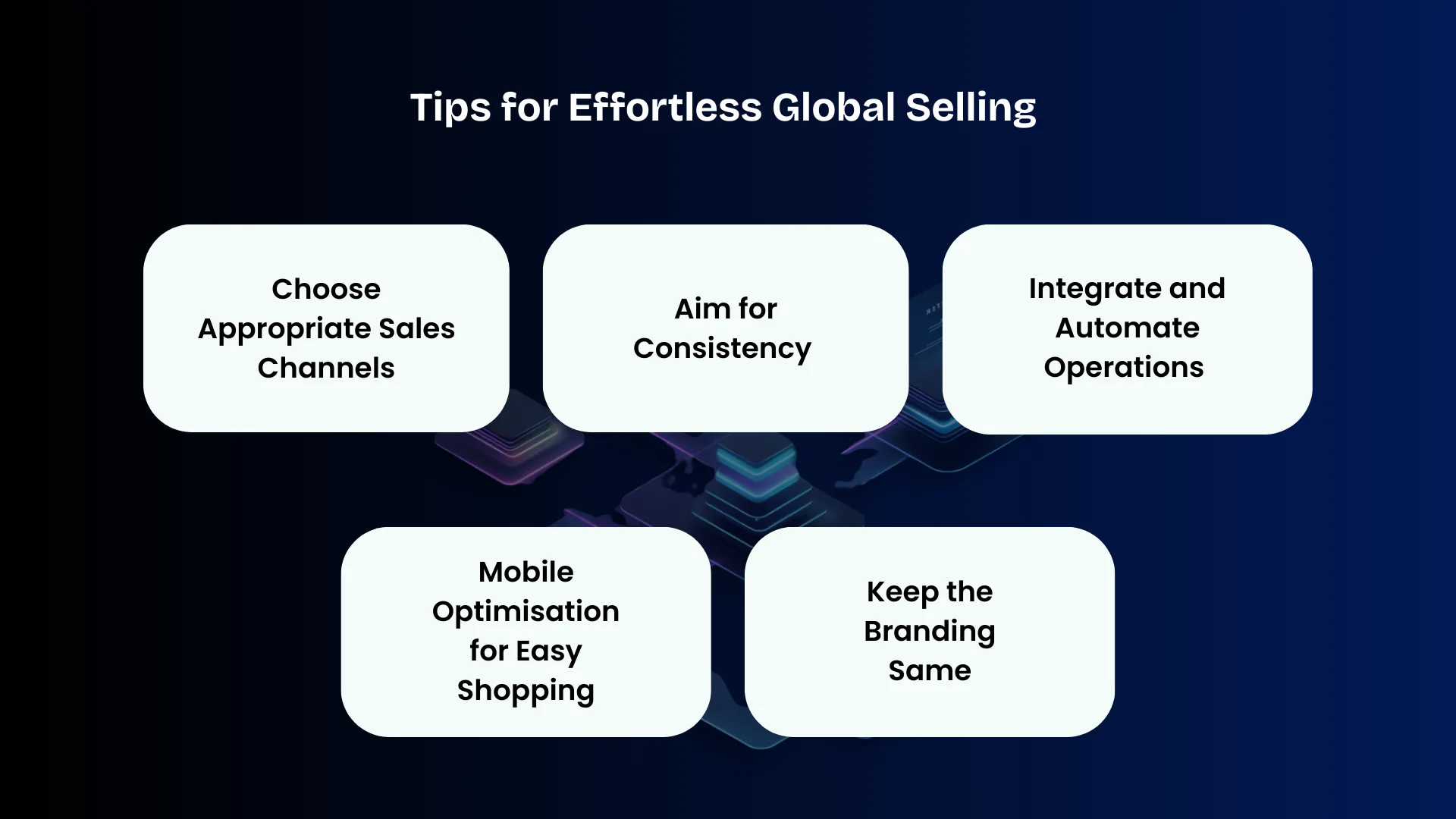
While there are ample options for multichannel eCommerce selling, the choice of channels makes a lot of difference. Sellers need to consider their consumer base, the sales channels where they can find them, and then sign up for the same to maximize the reach. Also, factors like platform fee, requirements, and standards for sales channels need to be compared to optimize revenue.
Step 2: Multi-Channel Integration
Once the sales channels are selected, selling on multiple channels would require multichannel integration. This step allows the seller to bring the different sales channels together on a central platform. Also, a smart software would enable the e-commerce business owner to integrate a 3PL fulfillment partner providing multichannel fulfillment services for a seamless global selling program.
Step 3: Optimize Listings
Once the multi-channel selling integration is done, the product listing has to be optimized according to international selling. It needs to have a price quoted as per the local currency, and some references for the locals to relate to. Also, high-quality images and details have to be added for customers to get attracted.
Step 4: Inventory Management
The next is inventory management; for orders to get delivered seamlessly, inventory has to be available at all times. Make it a point to look for an integration software that comes with this feature. With a well-optimized inventory, demand forecasting also becomes easier, and sellers do not have to face situations like stockouts and dead inventory.
Step 5: Order Fulfillment
Optimize the order fulfillment process to effectively manage multichannel fulfillment services. Sellers can use an application with an order management system (OMS) or 3PL integration that supports automated order fulfillment. This feature is specifically important to keep customers happy and provide real-time purchase tracking.
Tips for Effortless Global Selling
Challenges of Global Selling with Multichannel Ecommerce
There are definite roadblocks on the way that you should know. Here are the possible challenges on the way:
- Account Management: Managing multiple sales channels can be a bit of a task because different sales channels have their respective way of functioning. Managing them simultaneously is a difficult task.
- Inventory Management: Inventory management becomes difficult due to multiple locations and stock stored in different warehouses. This also requires documentation when selling internationally.
- Consistent Consumer Experience: Being consistent in consumer experience is only possible if the seller has streamlined all the processes of business, which in itself is a challenge.
Multichannel Selling Fosters Global Expansion
If the seller is able to overcome the challenges mentioned above, they will easily be able to expand the business globally through multiple sales channels. However, to overcome these challenges, they only need one multi-channel integration software - MapMyChannel. It is a plug-in software smartly designed to cater to your e-commerce business needs, with a special focus on global expansion requirements. From inventory management, order fulfillment, to updating customers with order status, this all-in-one application can do everything you can think of. Multichannel sales is the exact route for sellers willing to create a global brand. Now wait no more and sign up on MapMyChannel to start your global selling journey.
Seamlessly integrate with multiple marketplace and expand your business globally with multichannel ecommerce. Contact info@mapmychannel.com and optimize your multichannel selling.
Get in Touch

.webp)
.webp)


