
E-commerce businesses are built on multiple operations combined to form a seamless process. The ultimate goal of this process is to achieve customer satisfaction and accelerate sales. But out of the endless tasks conducted by e-commerce sellers, fulfillment is the most important one that requires maximum focus. This is where the entire sales, marketing, advertising, listing, and SEO optimisation ends, and the actual sales happen. Receiving an order is one thing, and delivery of the same is another. Stores listed on e-commerce websites cannot celebrate an order until the same is delivered and the consumer gives a heads-up for the product. Simplifying this entire journey of order fulfillment, this blog is going to educate you on various pointers where your business might lag. Read this piece to equip yourself with useful facts and information to realise the potential of digital business.
What is Ecommerce fulfillment?
The first and foremost puzzle for new sellers in the industry is: “What is order fulfillment?”
E-commerce sellers put in every possible effort to attract customers and make conversions. They list products with high-quality images, optimie the same with keywords, add details, run advertisements, and marketing campaigns. After all this, a customer finally lands on the store, and some of them place an order.
After this, the simple yet not-so-simple process of ecommerce fulfillment is executed. Starting with order confirmation, ending with final delivery at the consumer’s doorstep, the process involves multiple steps to be discussed in further sections of this blog.
What are the Steps of Order Fulfillment?
There are precisely five stages that an order goes through before getting delivered to the end consumer. Here’s a detailed view of the steps involved in order fulfillment:
First: Receiving the Inventory
Here, sellers need to store the stock in the warehouse and keep a track of the numbers to manage inventory. Inventory management is another important part of the process, which allows the seller to fulfill orders without the fear of overselling or dead inventory. This step holds special importance as stocks in the warehouse allow the seller to deliver the final product on time.
Second: Order Pick-up
Once the seller receives an order, they need to check with the inventory about the availability of the products. On confirmation, the product needs to be picked from the warehouse and packed safely so that the product is not damaged in transit. Many e-commerce marketplaces have laid out their standards for delivery, and business owners must follow them while packing goods.
Third: Shipping with Labels
Finally, the packed order is sent out through shipping. The package must contain shipping information like name, contact number, and address of the customer to which the parcel has to be delivered, for smooth coordination between the delivery person and the end consumer. With all the required information labelled on the package, delivery is easier and shipping is efficient.
Fourth: Return Processing
Now, the process does not end with the delivery; it has more to it. If the customer does not like the product for any reason, they opt for a return. The seller has to manage the same as well. The most important part here is to manage a safe return and effective refund if the items are in the required condition. Only after the stock is recorded in the warehouse should the seller initiate a refund, and finally, the process will come to an end.
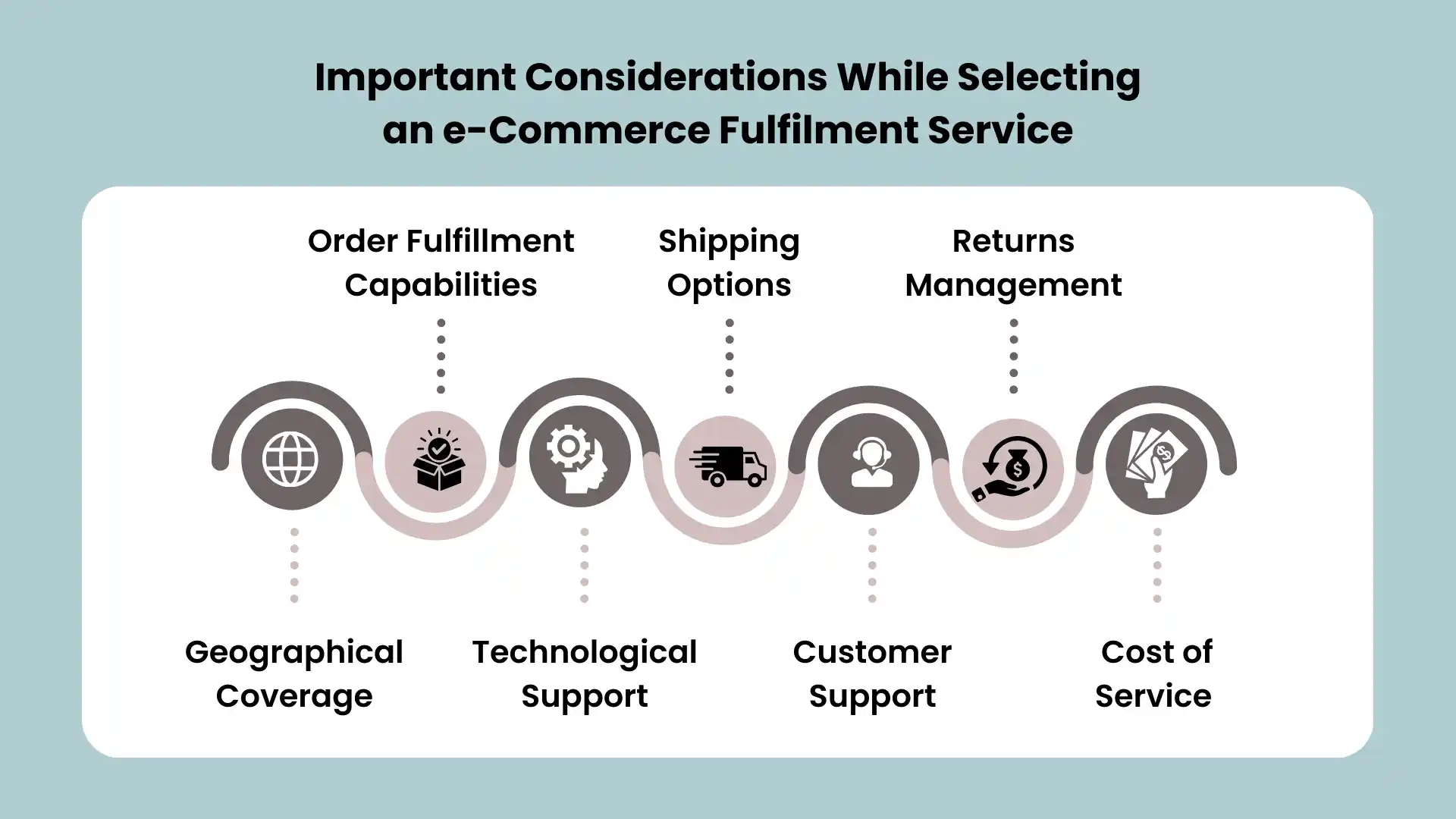
What are Types of Fulfillment
Here are the methods by which the seller can undergo the fulfillment procedure:
In-house Fulfillment
This model simply requires the seller to take care of the fulfillment procedure on its own. Everything from processing to shipment and then delivery is done by the seller itself.
Third-Party Logistics (3PL)
This is the most popular means of order fulfillment, wherein a third-party service provider is involved in the delivery process. Basically, the fulfillment procedure is outsourced to a third-party service provider that holds expertise in the field for seamless delivery supported by accuracy.
Dropshipping
This method allows the seller to get the product picked up from the location of the manufacturer and then deliver it to the final destination, without the seller having to worry about the storage of the product. This model is useful for the sellers who are just acting as middlemen. They are no longer burdened with warehousing.
A seller might choose to combine different models in a hybrid model to offer a comprehensive fulfillment experience to its customers. Also, many sellers are often confused what is the difference between fulfillment and 3PL. Where Fulfillment is an umbrella term, 3PL, as explained above, is a model or method through which the delivery process can be simplified via outsourcing.
Related Blog; How to Select the Best Fulfillment Partner for Ecommerce Business?
What are the Advantages of an Efficient Order Fulfillment System?
Since you know what order fulfillment is, along with its procedure and different models, you also need to understand the importance of an efficient order fulfillment system and what other than advantages can help you understand the same better. Here are the benefits of the same:
Improved Customer Satisfaction with Efficient Delivery
Efficient order fulfillment can help the sellers in meeting customer demands with timely order delivery. Customers tend to come back to the store that delivers their orders on time, error-free, which allows the sellers to have repeat business and greater customer loyalty.
Time Optimisation with Streamlined Processing
The time it takes to handle orders, from receiving them to shipping them out, is optimised with efficient order fulfillment. Faster delivery times are followed by the same, which can further increase consumer satisfaction. Consumers are attracted to online stores that can fulfill their orders quickly.
Minimal Errors with Automation
Another effect of streamlined order fulfillment is the reduction of order mistakes. For e-commerce companies, mistakes and other blunders can be expensive. Efficient order processing lowers the possibility of mistakes, which leads to fewer exchanges, refunds, and unhappy consumers.
Operational Efficiency on Point
Operational efficiency is increased by effective order fulfillment. E-commerce companies can lower expenses and increase overall efficiency with streamlined procedures. Increased profitability can result from organizations operating more efficiently and profitably.
Higher Profitability with Better Sales
When the order fulfillment process is sorted out, the seller is able to make higher sales and fulfill more orders in less time. Especially when it comes to small businesses, they depend on sales volume to survive in the industry, efficiency in fulfillment can help them stabilise themselves and establish their business better.
Online stores can always opt for order management software. However, employing a software solely for order fulfillment is not feasible for any ecommerce business. So, sellers look out for an e-commerce integration software that comes with features like order management and inventory tracking. This will give the business an edge over its competitors with the support of automation and technology.
Efficient eCommerce Fulfillment: Key Strategy to Business Growth
E-commerce businesses are not just about listing and selling; the entire business’s performance depends on the fulfillment of orders. Only an efficient ecommerce fulfillment strategy can give a business the boost that it requires in the long run. For that, sellers can employ software that automates the processing of orders and leverages the efficiency for faster deliveries. If you are trying to grow your business, this is the first and foremost area to work upon.
The future of eCommerce Depends on Fulfillment; FAQ
What is ecommerce fulfillment?
eCommerce fulfillment refers to the delivery of orders placed by consumers after processing them.
What are the steps of order fulfillment?
Order fulfillment involves four steps: Inventory Store, Order Pick-up, Shipping, and Return Processing.
What are the types of fulfillment?
There are three types of fulfillment: In-house Fulfillment, Third-Party Logistics (3PL), and Dropshipping.
Get in Touch

.webp)
.webp)


