
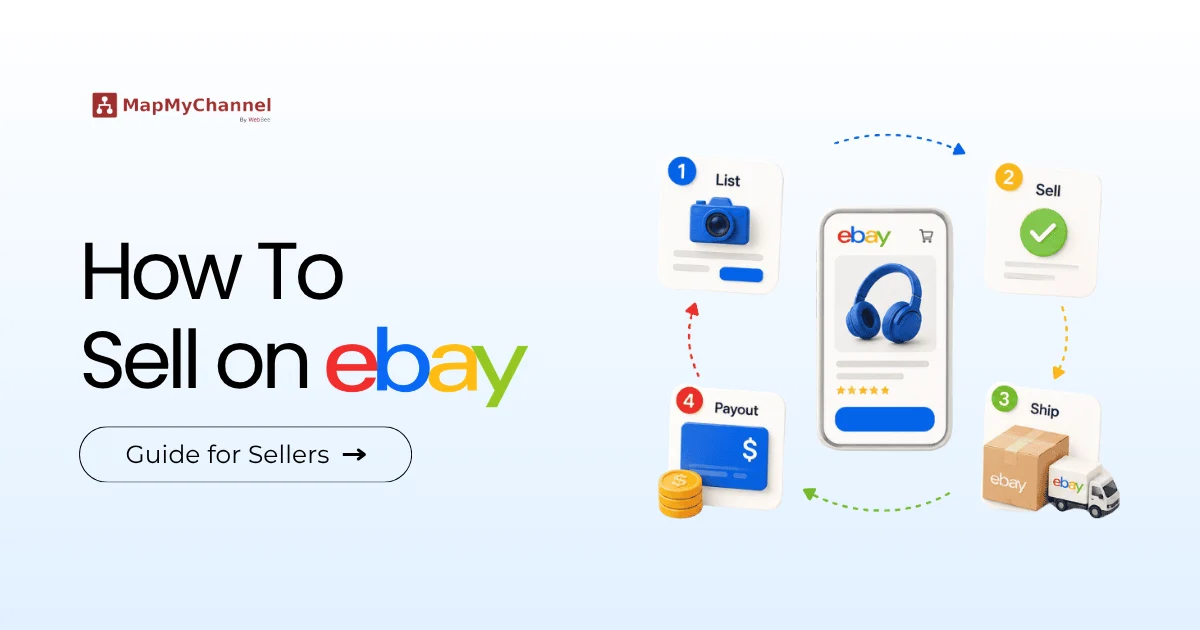
Introduction
Selling on eBay is an excellent way to reach a large customer base without the hassle of designing and creating a separate e-commerce store. eBay offers several selling options for businesses of all sizes, from auction listings to fixed-price listings. However, before selling on eBay, sellers must consider product pricing, listing optimization, shipping and handling, seller fees, returns, and excellent customer service.
This blog is a detailed guide for sellers who want to sell on eBay - from opening an eBay seller account to listing their very first product and optimizing the listings.
What New Sellers Need to Know About eBay
Before you start selling on eBay, understand how the eBay marketplace works. eBay allows sellers and businesses to sell a wide range of products. As a beginner, start slow and sell only a few products that are easier to photograph, package, and ship. This way, beginners can learn the basics of selling on eBay before taking on complex inventory or order fulfilment requirements.
The difference between a seller account and an eBay Store is crucial. Sellers can start selling without subscribing to a Store, but as orders increase, they may need to manage inventory and more operational tools. That is when subscribing to a store can make a difference. Most importantly, do your market research before you buy inventory, and look at the prices of sold listings on eBay; these show what buyers actually paid, not what sellers are asking.
How to Start Selling on eBay
Selling on eBay can be simple! Here’s an overview of the basics.
1. Set Up Your eBay Selling Account
First, learn how to set up an eBay account and create a seller profile. Casual sellers may already have an eBay personal account, but would want to upgrade to a seller account when they start selling full-time.
eBay asks for information to verify your address and payment information. Keep your personal and payout information up to date and accurate. Having the below basic information ready will significantly reduce your listing time when creating a sale:
- Product name & Brand
- Product photos & Condition
- Variations like Size, color, etc.
- Selling Price & Shipping info
- Return details & Product numbers
2. Evaluate the Value of an eBay Store
Whether sellers should set up an eBay store depends on how quickly they want to sell and the scale of their business. A store helps sellers create a uniform customer experience, but it’s not essential until they are ready to expand.
A new eBay seller with only a few products might find it more convenient to keep the store subscription low in the beginning. Keep eBay Store Subscriptions in the bundle of selling tools to be considered for use as inventory and sales volume grow.
3. Choose a Competitive Price Point
Pricing is the primary driver of sales. Use the following standard process to establish a competitive price point:
- First, search eBay for products equivalent to yours. For comparison, filter by items that have recently sold, and compare listings by: Brand, Model, Condition, Age, Product details, etc.
- Always be sure not to look solely for active listings with the highest price. This is the demand for a particular seller’s item, not what a buyer has actually paid. Looking only at sold listings shows what the eBay seller can have actually received.
- Determine whether to sell via Buy It Now or auction-style. The latter suits rare and unique products because a bidding war can drive up the price. When selling a limited range of collectibles, an auction is the best option when other buyers are competing for an item.
4. Create an Optimized Product Listing
Your eBay listing is the point where a potential customer decides whether your product is worth buying. Your product listing must describe your product accurately and must provide all essential information that customers would find enough to buy the product.
- Write an SEO Worded eBay Title: Your listing title must include relevant keywords organically. eBay recommends descriptive details to help ensure your article is visible.
- Create All Necessary Details: Don’t ignore writing item specifics; provide complete details for your product, including brand, size, color, condition, material, model, type, compatibility, and more. Structured product information helps customers know exactly what they’re seeing and makes the listing more relevant to marketplace searches.
- Upload Clear Product Photos: Be sure to upload sharp and clear product pictures in good lighting, and include multiple views of the item. Product photos help set realistic consumer expectations and reduce the chances of returns.
- Write a Solid Product Description: Tell consumers exactly what they will get with the purchase. Rather than overfilling the item description with keywords, include the target keywords (primary and secondary) naturally and prioritise what people need to know.
5. Determine Shipping and Return Policies
Consider shipping costs that can take from a sale, and offer calculated, flat-rate, free shipping, local pick-up, and accepted international shipping options. Offer a transparent return policy so potential buyers can buy from you with as much confidence as they would from Amazon. If you're new to eBay shipping, learn how to ship on eBay and choose the right shipping method for your products.
What Are the Costs to Consider When Selling on eBay?
While eBay gives sellers a set number of free monthly listings, free listing allowances don't cover the full cost of doing business. To run a profitable store, factor in these additional platform fees, fulfillment expenses, and inventory costs:
- Final value fee: A percentage of the total sale price charged automatically when an item sells.
- Insertion fee: The base cost of creating a listing, charged if sellers exceed their monthly free listing allowances.
- eBay Store subscription fee: A fixed, recurring operational cost if choosing to subscribe to an eBay Store tier.
- Promoted Listings fee: Additional, optional advertising costs incurred to boost product visibility across search results.
- Fulfillment overhead: The total physical cost of custom shipping labels and packaging materials.
- International transaction fees: Surcharges applied to orders placed by global buyers (where applicable).
- Inventory cost: The initial investment required to source or manufacture the product.
12 Practical Tips for Selling on eBay Successfully
Take these steps to expand your ecommerce business on the eBay marketplace:
- Research your niche: Check search demand and identify what demand is by analyzing sold items before buying inventory.
- Use buyer-oriented terms: Target relevant search terms naturally and keep keyword stuffing out of the product descriptions and titles.
- Write specific titles: Craft clear headlines that mention the brand, model, size, sort, condition, and extra features.
- Complete item specifics: Fill every field and try to provide complete information about the product.
- Use high-quality photos: Capture clean, bright images and use professional photos of the items.
- Be honest about condition: Disclose all item imperfections and flaws transparently.
- Keep your pricing on point: Look at actual sales data rather than asking prices set by your competitors.
- Calculate profit margins: Calculate the profit before listing an item: include fees, shipping, packaging, the cost of the product, advertising, etc.
- Offer competitive shipping: Provide fast delivery times and competitive shipping rates, with customer-paid shipping costs.
- Build good communication: Respond quickly to questions, encourage positive shipping feedback, and minimize delivery days to build rapport with the buyer.
- Track and tweak listings: Thoroughly track and tweak the listings: change prices, item photographs, and item specifics to optimize performance.
- Reinvest and scale: Specialize and scale up once sellers learn how to sell! Reinvest the profits received to build a strong seller reputation.
- Listing and Selling Tools: eBay offers tools for pricing suggestions, shipping labels, listing help, advertising, and selling management, which may help ease the operational burden as business grows.
Conclusion
Selling on eBay is easy, but building a successful eBay business depends on how well a seller chooses a range of products to sell. Pick profitable products, create an optimal seller account, research prices of similar items that have already sold, create attractive search-optimized listings, optimize product photos, optimize your item specifics, and optimize your shipping and returns costs to increase your sales.
If you have never sold on eBay before, start small, learn from your first few sales, and optimize your listings and buy better items to sell. When sellers understand what customers are looking for and which products sell well, they'll be ready to upscale their eBay store.
FAQs
How much does it cost to sell on eBay?
Selling costs can include final value fees, insertion fees, Store subscription fees, promoted listing fees, shipping, packaging, and sourcing costs. Fees can vary by marketplace, category, and listing type.
How should I choose my listing price?
Search completed listings for your item on eBay to see how much similar products have sold for and look at the factors that influenced price such as brand, model, condition, shipping, and other included accessories. Set your price competitively for market value and make sure it covers your costs with room for profit.
What can I sell on eBay?
eBay allows sellers to list a wide range of new and used products, but certain items are restricted or prohibited. Check eBay’s policies before listing an item to make sure it is allowed.
How do I handle returns and refunds?
Set a clear return policy in the listing and describe the item's features, flaws, warranty, and functionality accurately. If a return is accepted, complete the eBay return process and refund the amount due based on the return policy.
What items are prohibited on eBay?
eBay prohibits or restricts certain products, including illegal goods, counterfeit items, and other products that violate its policies. Always review the list of restricted items on eBay before listing your products.
Get in Touch

.webp)

.webp)


