
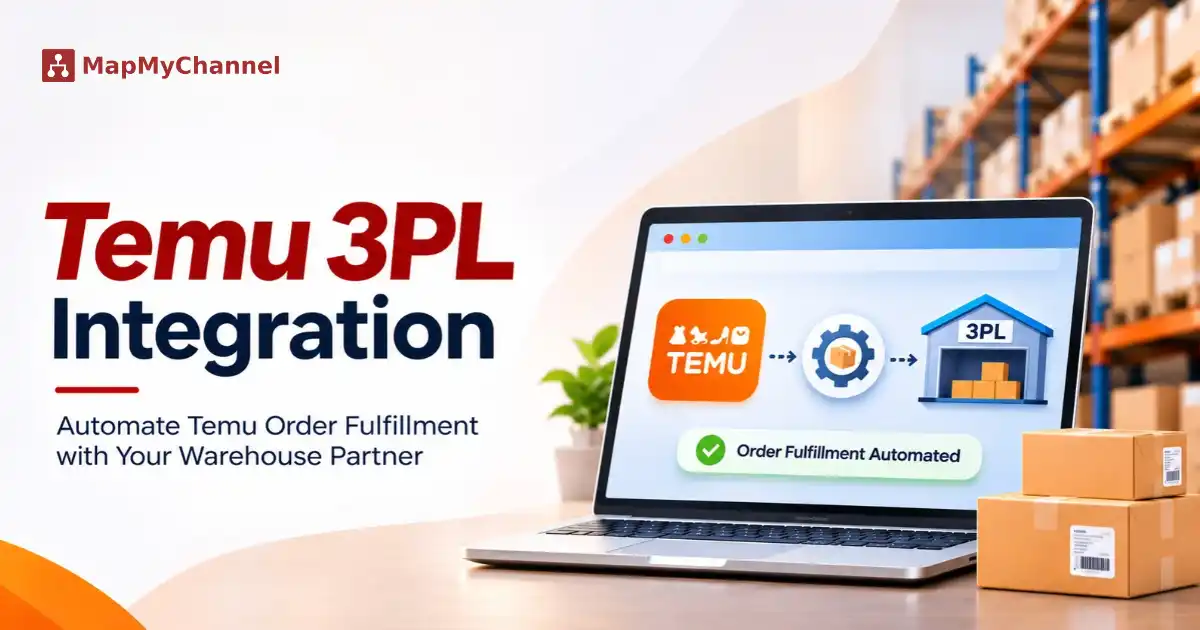
Temu 3PL integration to scale faster with ease. It's the perfect solution for local sellers to expand their reach without having to lug boxes or pound keyboards to get tracking numbers. When a business links its store to a 3PL warehouse, all orders originate from the marketplace to the warehouse, and then directly to the customer's door.
Automation is the key to success and survival on this new platform. Sellers can simply connect Temu to ShipStation or fulfillment partner of their choice using MapMyChannel. This blog is a guide on how a Temu fulfillment 3PL setup works and why it changes the game for a business.
Why Temu Sellers Use a 3PL?
A 3PL stands for third-party logistics company, which is "an outside warehousing company that manages stock, pulls orders from shelves, packs those orders into boxes and ships to the end customer".
Most store owners are fulfilling their orders using Amazon Multi-Channel Fulfillment (MCF) or Walmart MultiChannel Solutions (MCS), adding an outside 3PL for your Temu orders can meet the below specific business needs:
- Zero Platform Branding: Standard Amazon MCF orders are shipped in branded boxes with the Amazon logo printed on them, although unbranded shipping is available at an extra cost. Independent warehouses ship without any branding by default, keeping your Temu orders totally neutral.
- Predictable storage costs: Marketplace warehouses can charge sky-high storage prices during the holiday rush. Partnering with a private 3PL helps keep your long-term storage costs steady and manageable.
- More direct involvement: Private warehouses allow you to examine and handle your inventory more closely, give you more control over custom packaging, and allow you to combine separate items into one shipment.
And if you're weighing up which to go for, read the Temu fulfillment options comparison on WebBee Global. It details the actual charges for each route of dispatch. For local merchants seeking to protect their accounts, a Temu warehouse partner is the most sensible option.
The Problem with Manual Temu Order Handoffs
As a store expands, manual work becomes an absolute nightmare. Without Temu warehouse integration, sellers will have to go through the slow and frustrating manual process each day:
- Access their seller account and check for new sales.
- Download a spreadsheet file of customers' name and home addresses.
- Type it or upload those same things into a shipping program and use them to send an email to a warehouse.
- Allow the warehouse to send the box and produce a tracking code.
- Copy that tracking code into the seller dashboard so the customer knows the package is on its way.
This manual loop causes major headaches and takes hours of tedious work. A wrong zip code entered by a seller can result in loss of package. An error that is submitted to the platform too late can result in account fines and ranking penalty or even suspension. Temu order automation eliminates all this unnecessary work!
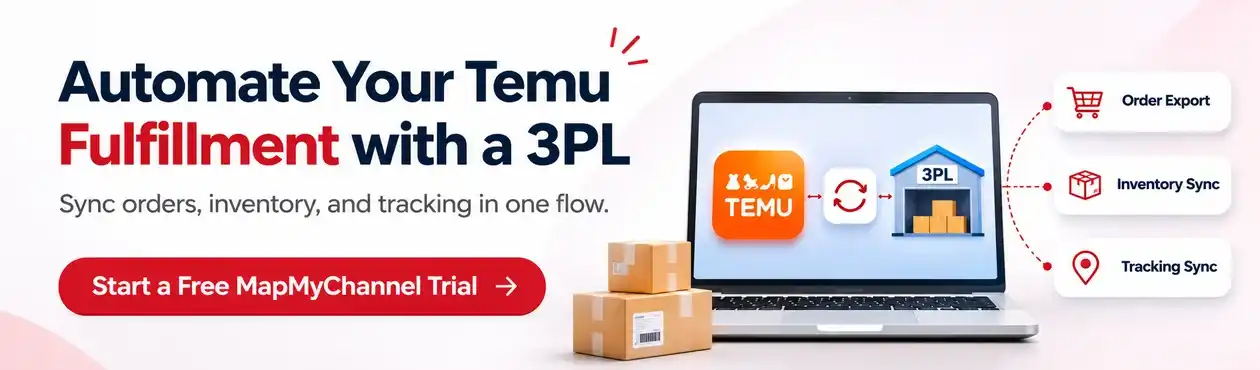
How the Temu-to-3PL Integration Works: Order Export, Inventory and Tracking Sync
An integration is merely a digital bridge that enables two different computer software systems to communicate automatically. A Temu 3PL integration connects the marketplace directly to the warehouse computer. The whole automation cycle operates smoothly behind the scenes via three effortless stages:
1. Automated Order Export
Within a second of a customer purchasing something, a copy of their order is created. It will be immediately emailed through the warehouse team with the customer's address and item selection – all without the merchant raising a finger.
2. Live Inventory Sync
Inventory sync is the process of syncing the stock with all the systems that are already in use. The moment an order is received and the item is shipped from the warehouse, the integration gets the update, and the numbers on the marketplace will be immediately updated.
3. Auto Track Sync
Tracking sync is also about automating the transfer of delivery codes. Rather, as soon as the user orders the printing of the transportation label, the program takes the tracking quantity and forwards it to the market. The consumer will be up to date proper away and the metric of delivery time will remain precise.
Temu Delivery Timelines and Seller Model Requirements
The delivery speed requirements are very stringent on this platform. The temu seller fulfillment model makes the seller bear full responsibility for the logistics.
- 48-Hour Shipping Rule: All local stock orders are shipped within 48-hours of the order getting placed.
- The Tracking Window: The merchant should include an actual tracking number from a dependable delivery courier (USPS, FedEx, UPS).
- Free Standard Shipping: The customer's will expect free standard shipping on the business website. Hence, the seller should include the shipping cost in the product pricing. It would prevent shrinking of profit margin.
And if a seller misses these windows, the platform will fine his business and may even suspend the seller account. This is exactly why manual fulfillment is such a high-risk tactic. By relying on a digital automation combined with a professional warehouse, the sellers ensure that they hit the tight shipping deadlines without fail.
Supported 3PLs: ShipStation, ShipBob, ShippingEasy and Others
Businesses don't need an expensive custom built software platform to begin automating their operations. The integrator can connect seamlessly with the below leading logistics applications:
Connecting Temu to ShipStation or any of the above software unlocks the best shipping capabilities for your business. There is absolutely no need to change the software used by the warehouse team in order to utilize the automation provided by the integrator.
Step-by-Step: Connect Temu to Your 3PL in MapMyChannel
Businesses don't need to create a costly tech team to put together Temu warehouse integration. Merchants can do it all by themselves in minutes with MapMyChannel by WebBee:
- Click on the official website and make a new account.
- Click on the sales channels menu, scroll down to the icon of the platform, sign in with your typical seller login to enable the secure link.
- Go to the fulfillment tab, choose the partner app (e.g.: ShipStation), and use the login info to launch the data bridge.
- A SKU is a code used to track a single item. Compare the product code on the market with a product code in the warehouse system. It can be used to help the integrator pick the right product when a customer orders.
- Select the order routing toggle, the sync stock toggle and tracking updates.
- Make a trial order to check if information passes smoothly from one system to another.
Conclusion
Running an e-commerce brand shouldn't cost you your entire weekend, manually typing in customer shipping addresses. A seamless Temu 3PL integration can eliminate the labor-intensive manual work from your business operations so you can focus solely on sourcing hot products and expanding your brand. Send every Temu order to your 3PL automatically. Start a free MapMyChannel trial today.
Get in Touch


