
Shopify has been a go-to online platform for online sellers trying to build a brand and not just a business. There are some 4 million active eCommerce websites on the selling platform, proving the fact that it is the primary choice of sellers trying to figure out their way into this vast industry. The sales channel offers multiple reasons to be on top of the list, like easy customization, effortless multichannel selling, and integration. Selling on a singular platform is not going to work in today’s fast-paced world; you have to be everywhere. So, Shopify integration is more of a necessity. This blog is framed to explain why it is so important for the growth of your brand.
What Does Shopify Integration Really Mean?
Shopify integration connects the online store to third-party apps, systems, or platforms like ERPs. It automates everyday tasks, syncs data in real time, and adds new features without the hassle of manual work. Think of inventory updating instantly across channels to prevent overselling, orders flowing straight to NetSuite, and shipping handled via 3PL Software. The overall processing of the e-commerce platform becomes quick and efficient for the business's functioning.
The Operational Reality of Growing Ecommerce
Sellers come across numerous issues regularly when there is no eCommerce automation in the scene. Let’s see what happens to your business in such a case:
1. Fragmented System and Data
Retailers pay heavy taxes while running on disconnected systems. Without real-time syncs, their team goes for manual updates that lead to errors, stock mismatches, and oversells. Customer information and order is also scattered in this case, leading to poor service.
2. Operational Inefficiencies
Online stores pile up a heavy technical load from outdated plugins. Also, fulfillment turns into a slow machine without automated systems, where manual steps lead to shipping delays and escalating labor costs. Managers struggle to sync stock, space, and staff, wasting hours on inefficient routines.
3. Deteriorating User Experience
The user experience is largely driven by efficiency and speed of any platform. While the Shopify store is still being handled manually, it is bound to go down due to the lack of consistency. Also, a hike in orders can slow down processing, leading to errors and an overall slowdown.
4. Barriers to Scale and Flexibility
Merchants tend to reach a growth ceiling where they are pumping more into marketing without any boost in revenue. It happens when operations can't handle the extra traffic or orders. Amidst all this, going global can't be imagined, given the handling of currencies, languages, and cross-border shipping headaches.
5. Lack of Support and Security Risk
A Shopify business can face adversities during peak seasons like Black Friday, as there is no support to manage the increasing load of work. Also, the security of data is at risk when there is a reckless transfer of data from one platform to another manually.
How Shopify Integration Automates Core E-Commerce Operations?
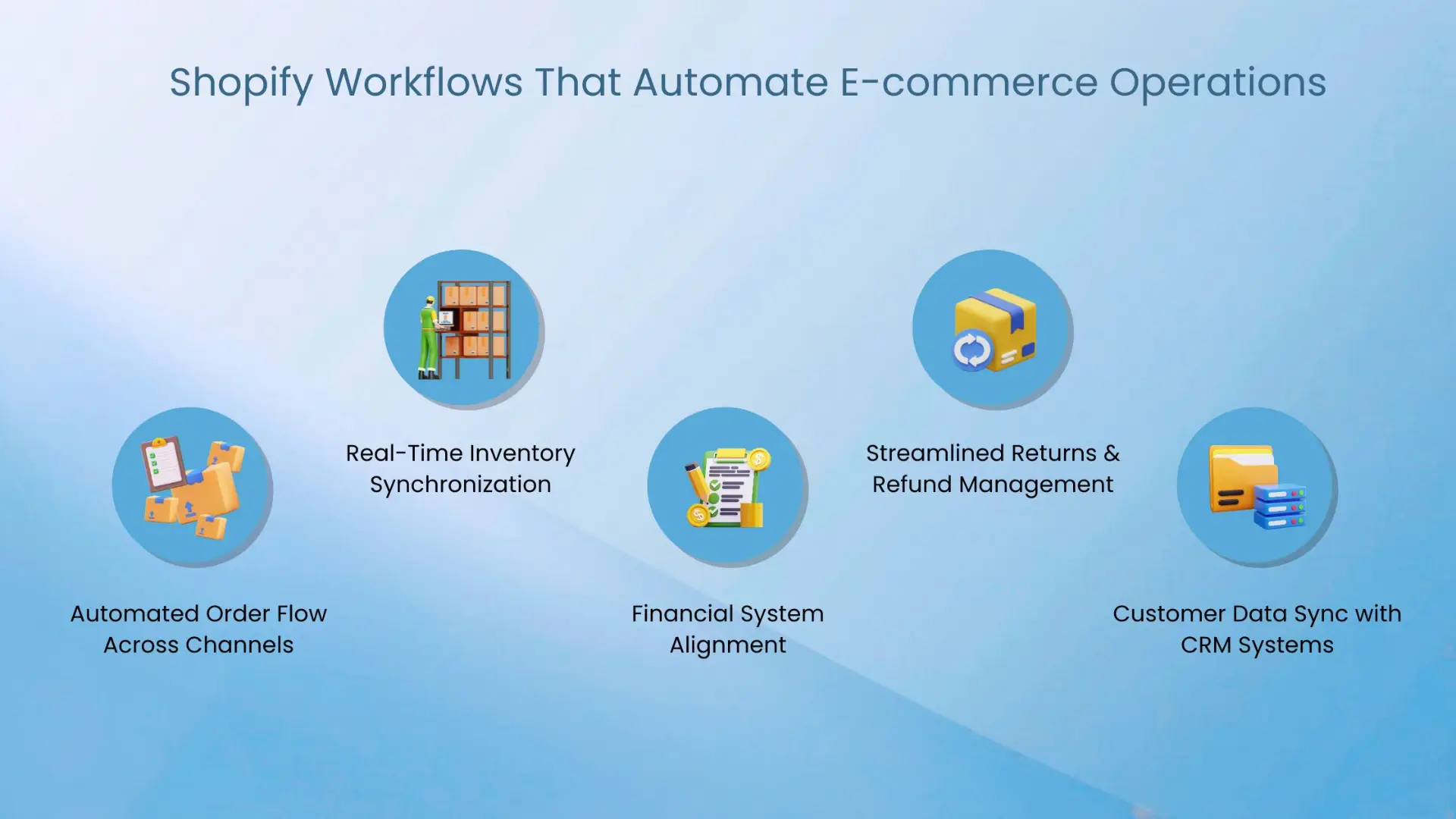
Shopify integration for e-commerce automation aims to streamline the core operations, like inventory management and order fulfillment. Let’s get into the areas of improvement:
1. Inventory Management
Inventory syncs across Shopify and different sales channels in real time means no more overselling or stockouts. Any sale instantly updates your online levels, hence there is confusion. Systems can also auto-generate reorder lists or ping purchasing managers to restock fast.
2. Order Management
Shopify orders instantly get synced to your ERP or 3PL without any manual typing needed. Apart from this, the software holds the capacity to send notifications to both buyers and sellers regarding the status of orders. Ultimately, sellers are able to maintain consistency.
3. Data Management
Customer data, like purchase history and contacts, syncs seamlessly between Shopify and the integration software for a unified view. Also, the overall business and sales data can be managed by the seller on a unified platform, easing out the access.
4. 3PL Fulfillment
An e-commerce integration platform allows sellers to bring their Shopify store with third party fulfillment partner. So, from here, the fulfillment is automated, and even the 3PL partner is managed and synced without any human intervention.
5. Multichannel eCommerce
Managing different sales channels is a cake walk when Shopify multichannel automation software is employed in the business. It automatically syncs all the orders on a centralized dashboard and keeps track of all those orders. So, there is no mismanagement.
Why Multichannel Selling Requires System Integration?
By this time, you already know the challenges you would face without the right ecommerce integration platform and the core operations sorted out by the same. Now, have a quick look at the benefits:
- Prevents Overselling Across Channels: Multichannel operations risk inventory discrepancies without integration. MapMyChannel ensures real-time synchronization across Shopify, Amazon, and many other online stores to maintain accurate stock levels.
- Enables Revenue Optimization: Selling on multiple platforms expands reach, but if systems are not aligned, it limits the growth. Shopify order sync automation unifies data for consistent order management and higher sales capture.
- Eliminates Manual Data Entry: Coordinating orders manually across channels is inefficient and error-prone. Integration via an API-based integration application automates workflows, reducing operational overhead.
- Supports Scalability During Peaks: High-traffic events strain unintegrated systems. MapMyChannel delivers robust synchronization to handle volume without disruptions.
- Streamlines Fulfillment Processes: Disconnected logistics cause delays. With the automation software, order status updates flow automatically, accelerating shipping timelines.
Conclusion
Your Shopify store really needs a perfect integration software that streamlines the operation from top to bottom. MapMyChannel here is the perfect solution that allows you to automate the operations from stock to order management. With add-on features like Hold Order and Virtual Bundling, the merchant gets space to fulfill orders effectively and increase the Average Order Value. Above all, the application has a proven record of pushing businesses towards global growth and 10X revenue, and there is nothing more that a seller can ask for. So, go ahead and integrate.
Get in Touch

.webp)

.webp)


