
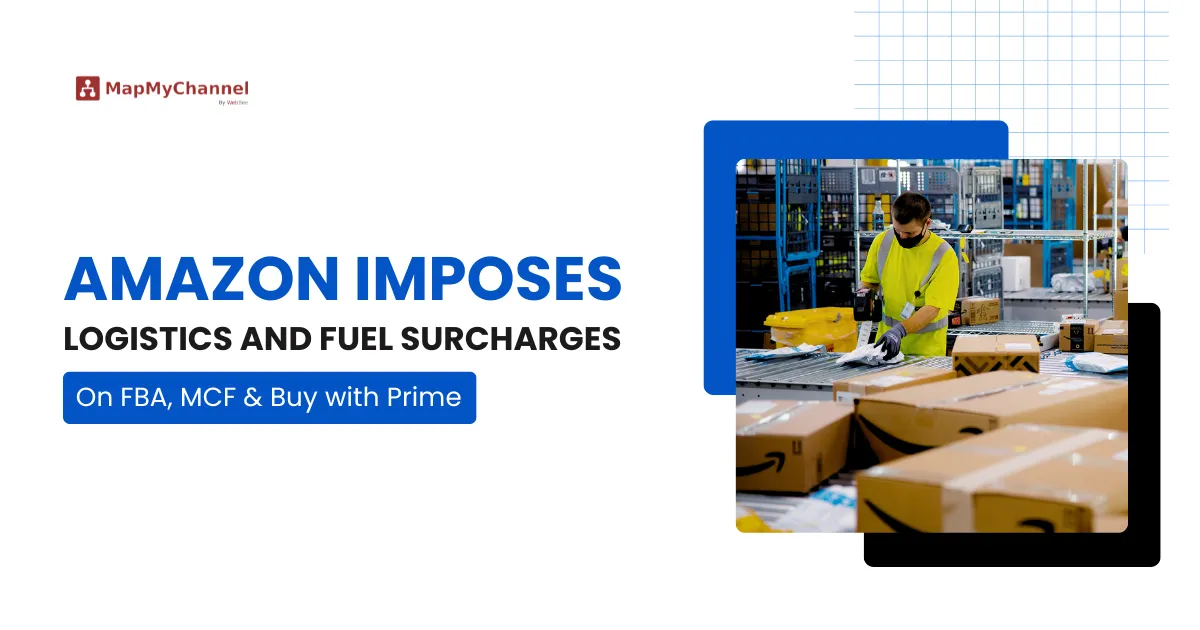
Due to ongoing global conditions, price surges, especially with fuel, have become really common. With that, transit and logistics take a direct hit because they need fuel to run. Also, the condition escalates unpredictably, so Amazon needs to ensure that orders are safe. All this involves cost in some or the other manner. To combat the current situation in a temporary fix, Amazon has hiked the fulfillment and logistics fees.
In a recent post, Amazon announced, “Elevated fuel and logistics fees have increased the cost of operating across the industry. We have absorbed these increased costs so far. However, similar to other major carriers, when costs remain elevated, we implement temporary surcharges on our fulfillment fees to recover a portion of the actual cost increases we are experiencing.” To understand the situation and changes, let’s dig deeper.
What’s Changed?
Have a glance at the highlights to understand what has actually changed:
- Starting April 17, Amazon has introduced a 3.5% fuel and logistics surcharge on fulfillment cost for Fulfillment by Amazon (FBA) in the US and Canada. This surcharge also applies to remote Fulfillment with FBA from the US into Canada, Mexico, and Brazil.
- From May 2nd, the hike will extend to Buy with Prime in the US and Multi-Channel Fulfillment (MCF) in the US and Canada.
- While major carriers like UPS and FedEx already implement dynamic fuel surcharges, Amazon’s fixed 3.5% increase appears relatively moderate by comparison, making Amazon a preferred partner for fulfillment and logistics services.
- The hike in charges is to be applied specifically to the fulfillment fee, not to the sale price of the item, which, on average, would come down to $0.17 per unit for US FBA (the rest depending on the dimensions of the package).
Where the 3.5% Fee Applies (FBA, MCF & More)
Sellers need to understand that Amazon operates multiple fulfillment programs, and the impact varies across each service. Here’s a more comprehensive breakdown of where and when the changes apply:
Why Amazon Is Increasing Fulfillment Fees?
Amazon announced this change amid ongoing volatility in global fuel and logistics costs. In recent months, rising energy prices and geopolitical tensions in key oil-producing regions have put pressure on supply chains worldwide. Due to partial disruptions or uncertainty around the Strait of Hormuz, fuel costs have increased. Through such routes, a significant portion of the world’s oil supply continues to play a major role in global price fluctuations.
As a result, delivery costs have increased significantly for sellers worldwide. For some time, logistics providers and e-commerce platforms absorbed these rising expenses. However, with continued pressure on margins, companies like Amazon are now passing on a portion of these costs through adjustments to fulfillment fees.
How does this impact sellers?
Amazon sellers are definitely going to be impacted due to this decision on the sales channel. Here’s what would happen, though temporarily:
1. Shrinking Product Margins
Firstly, the hike in logistics costs will reduce the profit margin. So, sellers need to review their prices and adjust them accordingly to maintain profitability. Also, while this process is carried out, make sure the competitor’s price point is considered.
2. Re-Calculate Amazon FBA Profitability
With the given changes, sellers need to recalculate the profits that they were earning earlier. There would be a definite change, and then the decision has to be made if certain products are still viable for selling or if they need to be held for a while.
3. Packaging Optimization
Packaging also includes weight and dimensions that directly impact the fulfillment fee. Now, sellers need to carefully examine the same and determine whether they can reduce the packaging weight or reduce the dimensions by using a smaller box.
4. Temporary Changes
This temporary price hike can be fixed with a temporary change of strategy and partners. For the time being, you can rely on a 3PL partner that is cheaper and supports the regions of interested you.
5. Reassess the Supply Needs
Your business might not need the usual inventory level at this point. So, as a preventive measure, you can put a halt to new orders placed in the supply chain and simply focus on what is selling at this point.
Key Takeaways
The hike in Amazon’s fulfillment fee is definitely temporary, only as long as the war is going on, but your business should be aligned and prepared at all times. Along with Amazon, you can look for a relatively cheaper yet compatible 3PL fulfillment partner. Integrate the same into your business and go ahead with the sales expansion and seamless delivery even in tough times. Problems are a part and parcel of the business world; you cannot stop because of them. Better find the resolution and move ahead with the best option.
Get in Touch

.webp)
.webp)


