
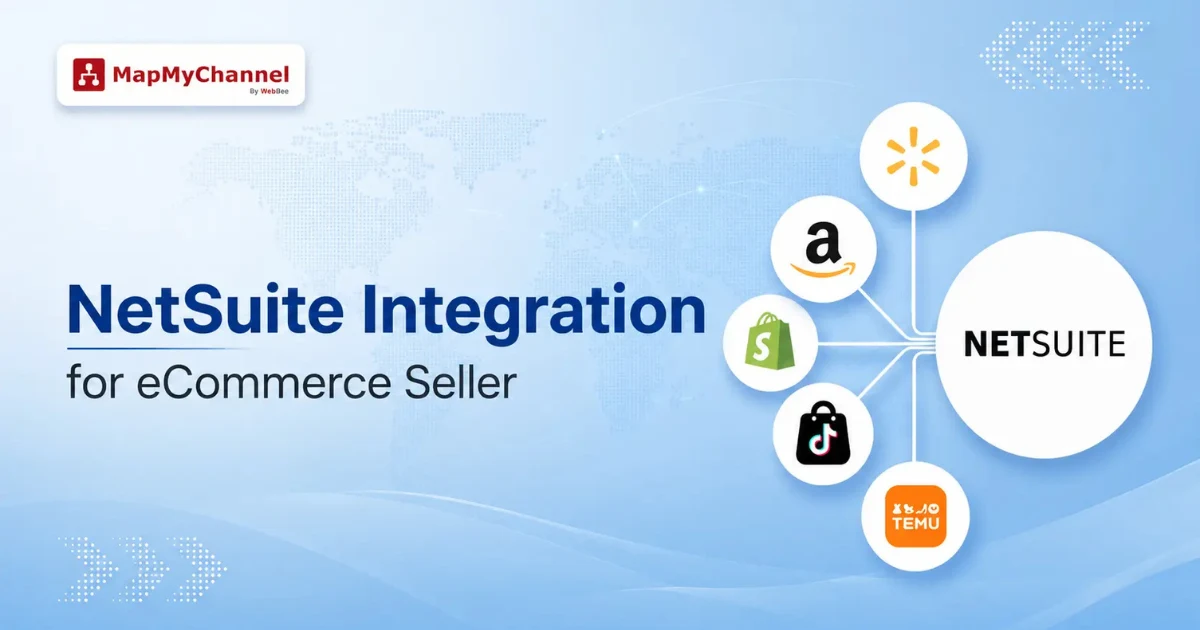
Introduction
NetSuite is a cloud-based ERP software that makes e-commerce operations very easy. It streamlines data collection, stock management, and the order management process efficiently. Above all, it brings seamlessness to the operations of different departments like accounting, human resources, financing, and manufacturing.
To understand how the software optimizes business operations, the seller will have to integrate NetSuite with their existing e-commerce platforms, as it improves operational visibility and reduces manual processes. It helps businesses overcome the operational challenges they would face without it. This blog intends to educate on the same.
What is NetSuite Integration?
NetSuite integration is the process of connecting your business systems to a centralized dashboard. Instead of manually entering data between your ERP, CRM software, third-party applications, or e-commerce store, it creates a smooth data flow where information updates automatically. This eliminates repetitive tasks, reduces manual errors, and keeps everything aligned in real time. The outcome is that businesses gain consistent data, clearer visibility, and streamlined processes across all operational channels like inventory, payments, and the entire order-to-cash cycle.
How NetSuite Optimizes eCommerce Operations
eCommerce operations include an endless list of jobs that are conducted on a daily basis for the smoother functioning:
1. Unified Data
NetSuite centralizes order management, product listing, and financial data into a unified dashboard. This eliminates discrepancies, ensuring every team, from sales to finance, is working with the same accurate information. The result is fewer errors and a clear view of business performance.
2. Real-Time Inventory Insights Across Channels
With NetSuite, inventory levels are updated instantly across all sales channels. Whether it’s your online store or marketplace, you always know what’s in stock. This prevents overselling, improves customer satisfaction, and helps optimize inventory management strategies.
3. Intelligent Order Management Automation
Orders flow seamlessly from e-commerce platforms into NetSuite, where they are automatically processed. This reduces manual intervention, speeds up the order fulfillment cycle, and ensures customers receive timely confirmations and updates.
4. Streamlined Fulfillment and Shipping Coordination
NetSuite integration with fulfillment partners and 3PL fulfillment coordinators provides real-time updates on order status and delivery. Customers benefit from accurate tracking, while businesses gain efficiency in managing logistics and reducing delays.
5. Financial Precision and Faster Reconciliation
By connecting directly with banking and payment systems, NetSuite automates reconciliation and financial reporting. This ensures accuracy in revenue recognition, reduces accounting workload, and speeds up the month-end close.
6. Scalable Growth Across Multiple Channels
As businesses expand into new markets or platforms, NetSuite scales effortlessly. It supports multi-currency, multi-language, and multi-channel operations, enabling growth without adding complexity to backend processes.
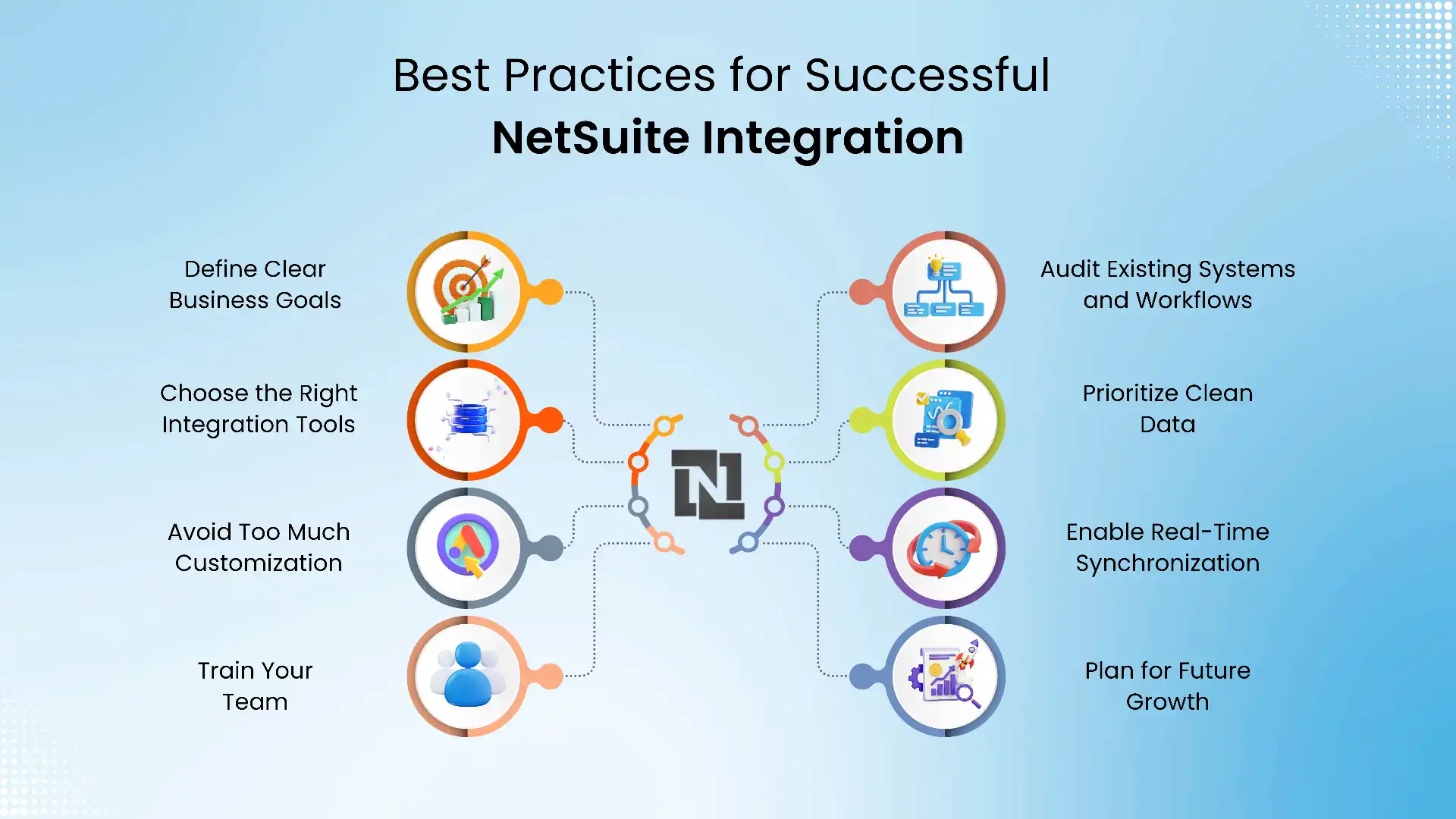
Best Practices for NetSuite Integration
Challenges of NetSuite Integration with Solutions
Since we have figured out how NetSuite Integration actually makes ecommerce operations so simple, let’s see what kinda challenges come along:
1. Complex Data Migration
Migrating data into NetSuite Integration is challenging, but not impossible. Businesses generally have risks of incorrect mapping, duplicate records, data loss, or poor quality, which can break automated workflows.
Solution: For solving the data migration problem, proper planning, data validation, and the right software are essential to ensure a clean transition.
2. API Limitations and Complexity
NetSuite imposes strict API usage limits, and working across multiple API connections requires advanced technical expertise. These limit the integration while demanding specialized skills to maintain efficiency.
Solution: For Solving API relate problem, businesses require experienced developers or integration specialists to maintain system performance.
3. Over-Customization Risks
Customization helps NetSuite Integration to fit unique business needs. Excessive customization can actually hurt the business. Over-customization makes upgrades difficult, increases costs, and reduces scalability, leaving businesses in rigid systems, making it hard to evolve.
Solution: Businesses should focus on essential customizations as per the business requirements that support long-term operational.
4. Insufficient Planning
Starting NetSuite integration projects without clear business goals or proper technical scoping often leads to disconnected processes and inconsistent data synchronization. This is problematic for e-commerce businesses, where misaligned requirements result in fragmented workflows.
Solution: In order to avoid this Netsuite Integration issue, Careful project planning helps ensure smoother implementation and better alignment between departments.
5. Real-Time Synchronization Issues
Keeping data consistency between NetSuite and other systems, like 3PL providers, CRM systems, or e-commerce platforms, is a consistent struggle. Failure in sync can lead to discrepancies in inventory management, tax calculations, or customer records.
Solution: Businesses should continuously monitor and optimize integration workflows that are important for maintaining data consistency.
6. Security and Authentication Concerns
Large business data sets can lead to slower operations, especially when multiple systems are connected simultaneously. At the same time, maintaining secure connections, often requiring static IPs and ongoing monitoring, adds to the maintenance burden, making performance and security a challenge.
Solution: To handle security and authentication issues, businesses must prioritize both system performance and data security to ensure stable operations.
Conclusion
NetSuite ERP Integration into an e-commerce business brings scale, seamlessness, and automation. It is not just about bringing different sales channels together; it is about giving yourself the time and space to think about the next step rather than being bound to what is happening today. NetSuite ERP integration brings your business closer to consumers by satisfying their needs at every point. Also, the clarity of different departments and sales channels is definitely worth it. One last tip: know your needs, find the right integration, and only then go ahead with it.
Get in Touch

.webp)

.webp)


