

Introduction
In the rapidly growing e-commerce sector, successful businesses can no longer be satisfied with a single sales channel. Consumers are actively looking for products on a mixture of websites and social media platforms, in addition to online merchants like Amazon and eBay. This rapid expansion represents a real shift in consumer behavior. This blog is the road map to success in the multichannel business reach. To provide you with the tools that need to succeed on a variety of attractions, including eBay, Amazon, and more. Additionally introduce you to MapMyChannel, an effective application that makes multichannel ecommerce management easier.
What Is Multichannel Ecommerce?
Selling the products over several online platforms is known as multichannel ecommerce. By using this strategy, you may reach a larger audience of potential customers who are actively buying on reputable multiple marketplaces, extending the reach beyond the boundaries of the website. But why is this so important for the expansion of businesses?
Benefits of Selling on Multiple Marketplaces
1. Reach More Customers
The products will be seen by an even wider audience of potential customers if you offer them on several platforms, which will greatly increase the sales potential.
2. Reduce Dependency on One Marketplace
By reducing dependence on a single platform, multichannel selling lowers the risk of algorithm updates or changes to marketplace regulations.
3. Improved Customer Engagement
Deeper consumer engagement can result from customizing the marketing messaging and promotions for different demographics across a range of media.
How to Choose the Right Ecommerce Marketplaces
Choosing the e-commerce marketplaces is a crucial step in building a multichannel selling strategy. Conduct market research before new marketplaces expansion, and identify the platform most compatible with your business goals.
1. Match Your Product Category
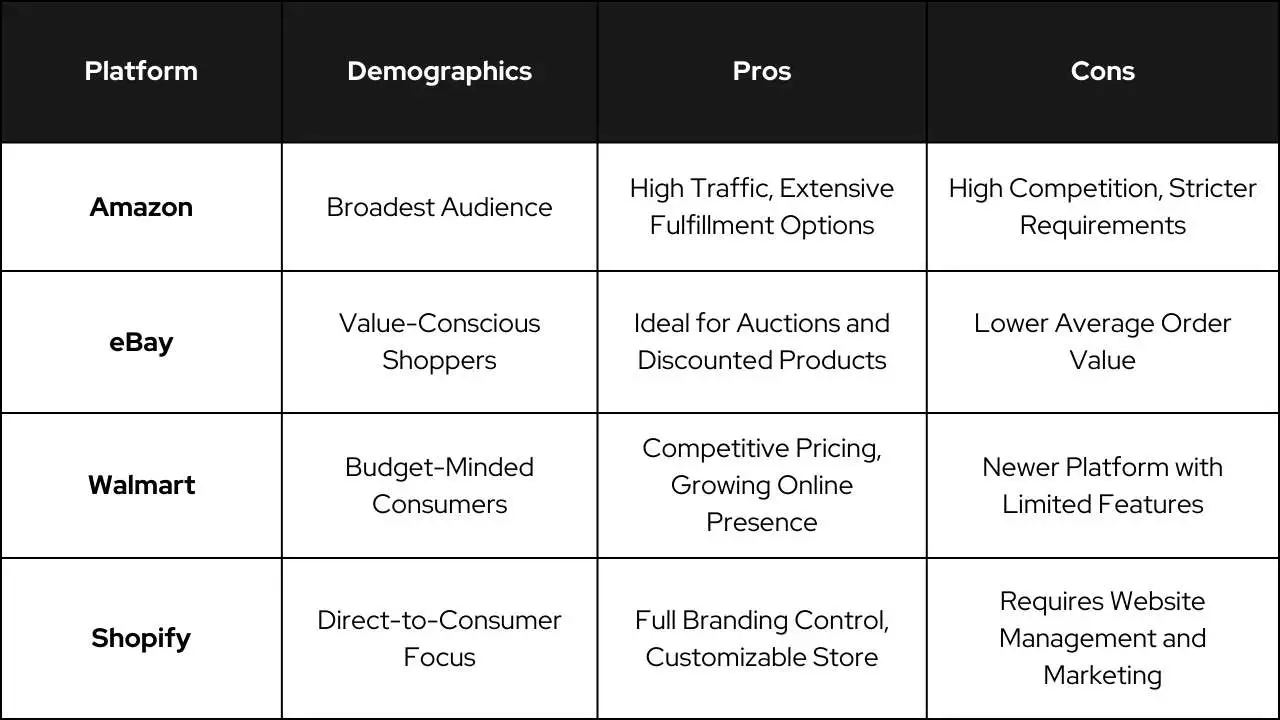
Certain marketplaces specialize in specific product categories. For example, Amazon is known for a wide range of products, while Shopify is ideal for building a custom brand experience. Match your product category to the platform's dominant product offerings.
2. Understand Your Target Audience
Understand the ideal customer's demographics and online shopping habits. Research which platforms they frequently use to ensure the products are readily available where they look for them.
3. Compare Marketplace Fees and Features
Each platform has its own set of fees and functionalities. Compare pricing structures, commission rates, and features like advertising options and fulfillment services before listing your products.
Quick Comparison of Leading eCommerce Marketplaces
How to Manage a Successful Multichannel Ecommerce Business
Keeping track of inventory, orders, and fulfillment across several platforms can become more challenging as your multi channel business grows. Managing multiple sales channels requires centralized operations to minimize manual effort. Ecommerce integration solutions such as MapMyChannel gives you centralized management over all of the sales channels, which simplifies multichannel ecommerce management.
Now that you've selected the right ecommerce marketplaces to target, get started with some practical tips for maximizing multichannel success:
1. Optimize Product Listings
Each marketplace has its own search algorithm and listing structure. Tailor the product descriptions, titles, and images for each platform to improve visibility and conversion rates. Use suitable keywords that customers can search for.
2. Keep Inventory Synchronized
It's critical to keep exact inventory levels across several platforms to prevent overselling and stockouts. To track products in real-time and connect inventory across all the multi-locations, use multichannel inventory management system.
3. Streamline Order Fulfillment
Order fulfillment done well is essential to a flawless customer experience. If suitable, think about providing a variety of fulfillment choices, such as local pickup, expedited shipment, and regular shipping. With multichannel integration platform, integrations with the main carriers become easy, you can follow shipments across platforms and speed up order fulfillment.
How to Market Your Multichannel Ecommerce Business
Do not just post the products and wait for customers to come knocking. Effective marketing and promotion techniques are critical for boosting traffic and sales across the multichannel network.
- Marketplace SEO: Make sure the products show up in relevant search results by optimizing the product listings for search engines like Google, Bing.
- Sponsored Ads: To further boost product awareness, think about launching customized pay-per-click advertising campaigns on exact marketplaces.
- Run Promotions: Well-planned Global sales and promotions can draw in fresh customers and encourage current ones to check back at the listings.
- Offer Discounts: Try testing with multiple platforms to offer flash sales, package deals, and seasonal promotions.
- Customer Retention: Delivering outstanding customer service is essential to promote loyalty and trust on all platforms. Answer questions right away, find effective solutions to problems, and go above to satisfy customers. Maintaining a high standard of customer service may have a big impact on the brand's reputation and promote repeat business.
How MapMyChannel Simplifies Multichannel Ecommerce Management
Managing operations and ecommerce integration across multiple platfoms might get more difficult as the multichannel organization expands. With MapMyChannel, you can streamline this process and concentrate on growth.
Key Features That Simplify Multichannel Selling
- Centralized Inventory Management: With a single sight of the products you sell, you can maintain accurate inventory levels across all sales channels.
- Order Synchronization: Use a single interface to handle and complete orders from many platforms with ease.
- Real-time Analytics: Gain knowledge of customer behavior, sales performance, and inventory movements through all available channels.
- Marketplaces Integration: To streamline business operations, connect your accounts on eBay, Amazon, Walmart, and other marketplaces.
How to Measure the Success of Your Multichannel Strategy?
It's critical to monitor key performance indicators to assess the success of the multichannel strategy and make data-driven adjustments.
Key Metrics Every Multichannel Seller Should Track-
- Sales Growth: Keep an eye on the total increase in sales on all platforms.
- Customer Acquisition Cost (CAC): Examine how much it costs on each platform to bring on a new client.
- Return on Investment (ROI): Determine each sales channel's profitability.
- Average Order Value (AOV): Monitor average monthly spending for each customer.
- Customer Lifetime Value (CLTV): Calculates each customer's long-term value CLTV.
- Continuous Improvement: Examine the performance data regularly to find areas that need work. To maximize your outcomes, try various product listings, pricing, and marketing approaches.
Final Thought
We are aware that developing a marketplace strategy might feel like climbing a mountain. To help brands, agencies, and retailers manage and optimize product data centrally in one interface, we have developed an automated platform. We act as a connection between the store and any appropriate marketing platforms. Are you prepared to advance the multichannel business? Examine the robust capabilities of MapMyChannel to see how it can help you in reaching e-commerce objectives.
Contact us today to learn more about how MapMyChannel can transform the multichannel business.
Get in Touch

.webp)
.webp)


