
Introduction
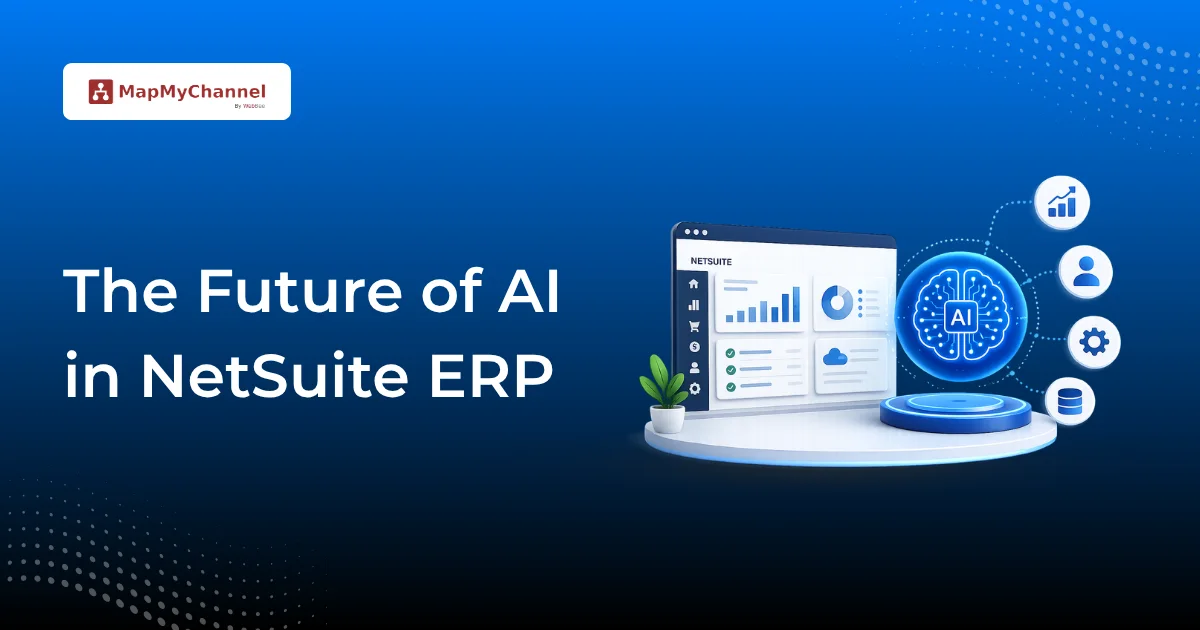
Artificial Intelligence (AI) has changed a lot about the world. With NetSuite as well, the transformation is groundbreaking. As the Enterprise Resource Planning (ERP) software inculcates AI into the system, it enhances automation, streamlines decision-making, and allows the business to have predictive insights that empower organizations to stay ahead.
It will not only bring different departments and operations of businesses together, but it will also give way to smarter financial management and optimization of supply chains. AI-driven NetSuite ERP is not just a tool but a strategic partner in business growth. This blog aims to bring up and discuss what happens as AI and NetSuite ERP come together.
What is AI in ERP?
AI in ERP systems is changing the way businesses run, making operations smarter and more responsive. AI-integrated ERP platforms can solve different challenges. By analyzing large volumes of data, AI identifies patterns that help companies forecast demand and market trends. This means businesses can adjust production, marketing, or product strategies ahead of time. Hence, making data-driven decisions is easier.
Advantages of AI-Driven NetSuite Implementation
While AI itself can do a lot for the business, its integration with NetSuite can offer exponential help. Here’s all that it can do for you:
1. Boost Productivity
AI is helping businesses work smarter. A Forbes study in 2023 found that 64% of companies believe it boosts productivity. In ERP systems, AI tools streamline tasks such as invoices and orders. This reduces manual entry, cuts errors, and lets staff focus on bigger goals that drive efficiency.
2. Delivery of Real-Time Insights
Machine learning helps businesses see the future. By studying past sales and current trends, it predicts demand and leads the seller towards better inventory management. This avoids stockouts and dead inventory, improves efficiency, and keeps customers happy.
3. Provides a Viable Plan
Data analytics and ML learn from patterns. They can spot supply chain delays by tracking orders, deliveries, and supplier performance. This helps companies act at the right time, cutting costs and improving efficiency with smarter, data-driven decisions.
4. Personalized User Experience
AI makes experiences feel personal. By studying customer feedback and interactions, tools can suggest products that fit user preferences. This builds trust, boosts satisfaction, and strengthens loyalty. Even chatbots can deliver tailored help when trained well.
5. Automation of Routine Tasks
AI-integrated ERP systems can handle routine jobs like invoice matching and data entry effectively. This speeds up work, reduces mistakes, and gives employees more time for complex, strategic tasks that drive growth.
6. Better Customer Interaction
Predictive analytics and machine learning make ERP systems smarter. They can understand customer needs and preferences. This helps sellers offer custom products and support. This way, issues like product shortages do not appear, eliminating the out-of-stock problem for once and for all.
Types of AI Technologies Used in ERP Systems
AI is an umbrella term that brings a lot of technologies along with it. Some of them are listed below:
- Machine Learning: Machine learning is now a core part of ERP systems. It identifies patterns, learns from data, and forecasts demand. This cuts errors, automates tasks, and sharpens decisions. The global ML market is set to grow rapidly by 2030.
- Natural Language Processing: NLP helps computers understand and respond to human language. In ERP systems, it processes feedback, emails, and queries, making interactions easier.
- Chatbots and Virtual Assistants: Chatbots and virtual assistants help with NLP. They guide users, answer questions, and handle tasks anytime. This reduces manual effort, improves efficiency, and makes customer service faster.
- Predictive Analytics: Predictive analytics uses past data to predict the future course of events. In ERP systems, it helps with demand planning, scheduling, and finances.
- Image recognition: Image recognition helps ERP systems work smarter. It can scan documents, track products, and spot defective materials. This improves quality, manages inventory better, and automates data analysis.
- Robotic Process Automation: RPA uses software bots to handle routine tasks like data entry and transaction processing. This speeds up work, reduces errors, and frees employees to focus on strategic goals.
- Data Mining: ERP systems bring together data from finance, HR, and customers. With data mining and analytics, businesses can bring out information, predict demand, cut costs, and optimize supply chains.
Challenges and Risks of AI in ERP
Well, where there are advantages and technological support, there will be issues. Here’s a quick view of a few of them:
1. Integration Issues
AI works best with clean and consistent data. In ERP systems, integration across finance, HR, CRM, and supply chains is necessary. Only the right integration can make it easier to connect tools, improve efficiency, and unlock the full power of analytics, which is really difficult to find.
2. Skill Gap
AI in ERP systems needs skilled people to run it. Many sellers might lack expertise in data science or ML. They will have to train teams or hire talent, though competition is tough. Investing in skills ensures AI serves its complete purpose
3. Change Management
AI in ERP systems often changes how work gets done. Employees may need new skills and training. Success depends on clear communication, planning, and helping staff feel confident with AI. This shift requires support to ease fears and encourage adoption.
Conclusion
What seems like a fancy update today will eventually become a necessity for your e-commerce business. AI is not just about automation and making things easy. It actually helps you take your business a step further. With data analysis, your business becomes ready for what’s coming up next. Also, customer satisfaction peaks with quick resolution and inventory management. Even orders can be delivered effectively, without any delay or error. All this is the exact mantra to win brand value in the otherwise crowded market.
Get in Touch

.webp)
.webp)


